

At a Gujarat plant, interns from the Indian Institute of Technology Bombay fixed a problem in one day. They had book smarts, but their hands-on skills from an apprenticeship really helped. This mix of learning and doing made them quick to solve the issue.
In India, vocational skills are key for career growth. They combine classroom learning with real-world practice. This way, graduates can start working right away, saving time and money for employers.
Vocational and technical education is vital. It makes graduates ready for the job market. We aim to improve technical education with creativity and new ideas. We want to change the view on trade skills and help people find stable jobs faster.
If you need help with programs or getting started in India, call us at +91 8927312727 or email info@nextstep.ac. We’re ready to help you build a strong career.
What Are Vocational Skills?
Vocational skills are job skills learned by doing. They come from hands-on training. This training teaches skills that employers need now.
Definition and Importance
Vocational skills are from vocational education. They teach how to do tasks in real life. You learn skills like electrical work or medical assisting.
Employers want people ready to work. Skill-building courses help you learn fast. This makes you more employable.
Common Examples of Vocational Skills
Healthcare teaches taking vital signs and infection control. Skilled trades like plumbing and welding teach problem-solving and safety. Automotive repair teaches diagnostics and repairs.
IT and technology teach networking and software troubleshooting. Culinary arts focus on food safety and prep. Hospitality teaches service and operations.
Many programs use labs, simulated workplaces, and online learning. This helps you learn by doing.
Benefits of Vocational Skills Training

Vocational education is a hands-on way to get ready for work. It gives you skills that employers want. You learn by doing, not just reading.
Enhanced Job Opportunities
Graduates have skills that employers look for. Many schools work with companies to offer jobs and training. This helps you stand out when you apply for jobs.
Higher Earning Potentials
Jobs in skilled trades pay well. In India, electricians and plumbers can earn a lot after short courses. Training is short, so you can start earning quickly.
Personal Growth and Confidence
Learning by doing makes you more confident. You solve real problems and work with others. These skills help you in many areas of life.
Classes are flexible, even for those who work. You can learn online or in the evenings. There are also ways to get help with the cost of training.
Popular Vocational Skills Programs
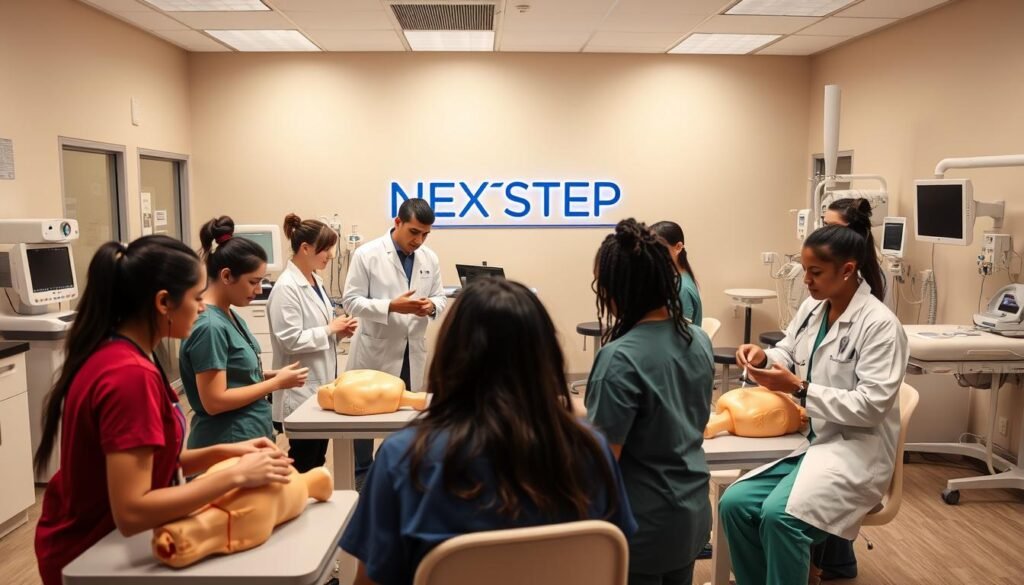
We offer top vocational programs that boost job chances in India’s growing economy. These programs focus on hands-on learning and quick paths to work. Students and workers get flexible schedules and job links in colleges and institutes.
Healthcare training prepares you for jobs in hospitals and clinics. You learn about vital signs and patient care. Many programs offer work placements to help you get hired.
Key outcomes:
- Short certification timelines that lead to immediate hiring.
- Practical patient-care skills aligned to hospital protocols.
- Pathways to advanced nursing and allied-health degrees.
Skilled trades programs teach you to install, diagnose, and repair. You learn from experienced tradespeople. Courses include electrician, plumbing, and HVAC.
Why employers hire from trades:
- Hands-on proficiency reduces onboarding time.
- Apprenticeship experience proves workplace readiness.
- Local demand for repair and maintenance keeps roles steady.
Technology courses cover networking, software testing, and programming. You get certifications from big names like Cisco and AWS. These courses are short and fit into your schedule.
Advantages of tech training:
- Practical labs and project work mirror real tasks.
- Modular formats fit evenings and part-time study.
- Strong employer demand for entry-level IT skills.
In healthcare, trades, and IT, we mix learning with work experience. Our focus is on programs that lead to jobs quickly. We aim for clear paths and results for technical learners.
How Vocational Skills Compare to Traditional Education
We compare practical training to broad academic study. This helps professionals pick a path that fits their goals. Vocational Skills give focused training for work tasks. Traditional degrees offer wide knowledge for careers and research.
Time commitment is key for working adults and students. Vocational programs last from months to two years. This lets learners start work fast. University degrees take four years, with more general courses first.
Shorter programs mean less time and quicker work start. This is good for those who want hands-on experience and to work fast.
Cost matters when choosing. Vocational courses are often cheaper. They are shorter, so you spend less on living and start earning sooner. This lowers debt.
Grants, apprenticeships, and government help in India make things cheaper. Paid apprenticeships let you earn while learning. This improves your money situation and reduces debt.
Vocational training focuses on direct career paths. It teaches specific skills like technician or electrician. Employers like graduates for their skills.
Universities focus on thinking, communication, and theory. These skills help in management or research after more study.
For engineers and technicians, vocational certificates add to university learning. These short courses improve Employability skills and confidence on the job.
We don’t think one way is always better. The best choice depends on your learning style, job demand, and future plans. Mixing paths can be the best choice.
| Aspect | Vocational Path | Traditional University |
|---|---|---|
| Typical Duration | Months to 2 years | 3 to 4 years (undergraduate) |
| Cost Factors | Lower tuition; paid apprenticeships common | Higher tuition; longer living costs |
| Career Focus | Role-specific training; immediate job readiness | Broad foundation; flexible future roles |
| Skill Outcome | Technical competence and Employability skills | Analytical skills and theoretical knowledge |
| Best For | Quick workforce entry; lower Time commitment | Long-term Career development; academic careers |
| Financial Support | Apprenticeship pay, grants, targeted loans | Scholarships, student loans, bursaries |
Choosing the Right Vocational Skill
We help learners find the right vocational skills. Start by thinking about what you like to do. Try short quizzes to see what you’re good at. Make a list of things that make you happy.
This helps you find jobs that match your interests and skills. It’s a step towards a better career.
Self-Assessment of Interests
Think about your day and what you do. Do you like working with your hands, talking to people, or solving problems on a computer? Use tools from career centers to find out.
Talk to teachers and people in your chosen field. Try out small jobs or volunteer. This helps you see if it’s really for you.
Market Demand Analysis
Look at job sites and government reports to find in-demand skills. See what jobs are needed in healthcare, trades, and IT. Check salaries and what you need to get started.
Ask employers about job openings. They can tell you about the work and what skills are needed. This helps you choose a job that you’ll enjoy and can do well in.
Industry Research
Look into training programs. Check if they are recognized and if they help you get a job. Make sure they teach the latest skills and safety rules.
Visit training places and talk to people who work there. Learn how your skills can lead to a job. Think about classes that fit your schedule, like evening or online courses.
- Practical tip: Make a chart to compare different programs. Look at cost, time, and job placement.
- Practical tip: Plan your money before you start. Look for funding and use tools to find programs.
- Practical tip: Plan your skills for the next two years. Include learning new things and getting certified.
How to Enroll in Vocational Training

We help you find vocational paths that lead to jobs. First, set your goals. Then, find programs that match your goals and meet local needs.
Finding accredited programs
Look for schools with AICTE, NCVET, or state board approval. Check if courses include hands-on training and work experience. Also, see if employers partner with the school.
Application process
Know what you need to apply: a high school diploma, age, or special skills. Many schools have open admissions and flexible start times. You’ll need your school records, letters of recommendation, and a portfolio.
Financial support
Make a budget for school costs: tuition, tools, travel, and living. Look for scholarships, grants, and loans for technical students. Also, check for apprenticeships, employer training, and vocational rehab funds.
Take steps to enroll quickly. Talk to admissions, get a course plan, and check for work placements. Use school career services for job help after you finish.
For help, call +91 8927312727 or email info@nextstep.ac. We can talk about programs, application times, financial help, and courses.
The Role of Apprenticeships

We see apprenticeships as a bridge to work. They mix work with learning. This way, people earn while they learn.
Benefits of On-the-Job Training
On-the-job training helps people get good at their job. They learn by doing and get help from others. This makes them ready for more responsibility.
Grants help pay for apprenticeships. This makes it easier for companies to hire them. It’s a smart way to find good workers.
Apprenticeships offer clear paths to success. They have goals, checks, and ways to get certified. This turns work experience into real qualifications.
Examples of Successful Apprenticeships
Skilled trades have clear steps to success. Electricians and plumbers start with simple tasks. Then, they do more on their own with help.
HVAC apprentices learn in class and on the job. They start with theory and then do it in real life.
IT apprentices try different jobs. They learn to help others, work with networks, and more. Healthcare apprentices get paid to learn in real settings.
If you want to learn a trade, look into programs. They offer hands-on learning, help from experts, and connections to jobs. Check out NEXTSTEP for engineering training that matches real-world needs.
Vocational Skills for the Future Job Market
We watch for changes so you can pick a career that lasts. The world and India are changing fast. This means some jobs grow more than others.
Here are the jobs that are growing fast. We also list the skills employers want. This helps you choose the right courses and training.
Emerging Industries
Jobs in renewable energy like solar and wind are needed. People are needed to install and fix these systems. Electric cars need mechanics who know how to work on them.
Automation and robotics are making factories better. Technicians who know how to use PLCs are wanted. Healthcare needs people who can work with new technology.
Digital jobs include setting up networks and working with the cloud. These are important for keeping things running smoothly.
Skills in Demand
Employers want people with technical skills and soft skills too. They need people who can install systems, fix electric cars, and work with computers. They also want people who can communicate well and work as a team.
Short courses help people learn new things without taking a long break. The government and companies help pay for these courses. It’s good to keep an eye on job ads and what employers say they need.
Getting recognized certifications can make you more attractive to employers. It helps you move to different jobs in the same field.
| Growth Sector | Core Technical Skills | Complementary Employability Skills | Typical Credentials |
|---|---|---|---|
| Renewable Energy (Solar, Wind) | System installation, inverter maintenance, electrical safety | Problem-solving, on-site communication, safety awareness | NCVET-aligned certificates, OEM training |
| Electric Vehicles | Battery diagnostics, EV powertrain servicing, high-voltage safety | Attention to detail, teamwork, service orientation | Manufacturer-certified programs, modular diplomas |
| Automation & Robotics | PLC programming, sensor calibration, maintenance troubleshooting | Analytical thinking, collaboration, process discipline | Industrial automation certificates, short courses |
| Healthcare Technology | Clinical equipment servicing, basic biomedical repair, support tasks | Empathy, clear communication, documentation skills | Clinical support certificates, accredited diplomas |
| Digital Infrastructure | Network fundamentals, cloud basics, cybersecurity hygiene | Adaptability, remote collaboration, customer focus | Industry badges, vendor entry-level certifications |
Choose your training based on what’s needed and what’s available. This way, you’ll get the most out of your time. You’ll also have skills that last in the changing job market.
Success Stories: Career Transformations

We share stories of how training and courses change careers. These stories are from healthcare, trades, and IT. They show how to get a job and keep growing in your career.
Healthcare to leadership: A clinical assistant got a special training and worked at a Mumbai hospital. This helped them become a supervisor in two years. It shows how training and work together fast.
Trades to entrepreneurship: An electrician apprentice in Pune got a special training and a license. The training paid for living costs and helped build skills. Then, they started their own business, serving big clients.
IT support to network admin: A trainee in Chennai got a short course in networking. This helped them get a job. They kept learning and moved up to network administration in a year.
These stories teach us about practice, work ties, and learning forever. Paid training and work ties make finding a job faster. Skills are what employers want in India.
For engineers and students, learning special skills helps. Skills like calibration, commissioning, or programming open doors. These skills lead to jobs in big industries.
- Hands-on practice builds confidence and measurable job skills.
- Employer partnerships provide placement pipelines and relevant experience.
- Continuous certification sustains career development and mobility.
These stories prove that changing careers is doable. Training that meets industry needs works. Vocational paths are creative ways to grow and succeed.
Challenges in Vocational Skills Training
We face real challenges in vocational training. These affect learners and employers all over India. Things like bad views on vocational paths, uneven accreditation, and not enough industry-grade equipment stop many from starting.
Money problems and being far from training centers stop working adults and rural students. Fast changes in what employers want also cause a skills gap. This makes some training old and less useful for getting a job right away.
We will talk about common problems and ways to solve them. Training providers, employers, and policymakers can all help.
Common Barriers
- Social stigma that views vocational paths as inferior to university degrees.
- Inconsistent accreditation and unclear placement records that lower employer trust.
- High cost for trainees: tuition, travel, and lost wages.
- Limited access to modern tools and labs outside major cities.
- Curricula that lag behind current industry requirements.
Solutions to Overcome Challenges
- Showcase measurable outcomes: employment rates, employer testimonials, and salary gains to change perceptions.
- Insist on accreditation and transparent placement data when choosing programs.
- Use grants, apprenticeship stipends, employer-sponsored schemes, and targeted loans to reduce financial barriers.
- Co-design courses with companies like Tata Motors, Infosys, and Siemens to keep curricula current.
- Offer modular, stackable credentials to support lifelong learning and quick reskilling.
- Expand access through flexible schedules, blended online modules, and local satellite labs for hands-on practice.
- Provide job-search tools, career guidance, and resume workshops to convert employability skills into offers.
- Engage government initiatives and apprenticeship incentives to strengthen the training ecosystem.
We think we can make vocational training better. By working together, we can help more people get jobs. This will make training more useful and help bridge the gap between school and work.
Next Steps After Vocational Skills Training
After finishing a vocational program, we suggest making a plan. Start by making a resume that shows your skills. Use job sites like Naukri and LinkedIn to find jobs.
Networking is key: go to industry events and meet people. Use alumni networks and groups like the Institution of Engineers (India) to meet others. When looking for jobs, tell stories of your problem-solving skills.
Keep learning: get more certifications and training. This makes you more valuable in the job market. Take short courses to stay up-to-date with new technologies.
Plan your career: start with basic certifications, then get more advanced ones. Look for funding and support for your training. For help in India, call +91 8927312727 or email info@nextstep.ac. Vocational skills are a great way to find a lasting career.