

72% of engineering hires say internship experience was key in their first job. This shows how internships can change a career fast.
We think hands-on learning is key to moving from class to real work. Internships put students in real jobs in many fields. They get to try out tools and methods before choosing a career.
Internships offer big benefits: using class ideas in real problems, learning industry ways, and getting jobs faster. Companies like Procter & Gamble and Boeing hire interns. Sites like Handshake help find these jobs.
Internships also help build networks and work habits. They shape how engineers think and act. In India, good internships help students find jobs, whether in tech or finance.
To see how internships can open up career paths, check out Honeywell’s internship stories.
For help finding internships for engineering students, call +91 8927312727 or email info@nextstep.ac.
The Importance of Engineering Internships

We think internships are key to linking what you learn in class to real-world projects. For engineering students, getting hands-on experience speeds up learning. It helps them make better decisions and figure out their career paths.
Real-World Experience and Knowledge
Internships give mechanical students a chance to work on engines and electrical students to test circuits. Civil students get to do surveying and site work. This hands-on experience turns formulas and diagrams into real results.
Interns go through the whole project cycle: planning, design, doing the work, and checking results. They learn to use CAD, simulation software, and industry methods.
These roles improve problem-solving and math skills. Interns learn to plan, manage small tasks, and share their findings. This makes it easier to start a full-time job later.
Building Professional Networks
Internships open doors to mentors, senior engineers, and peers who can help with career choices. They get feedback and grow through regular talks and reviews.
We suggest students have informational interviews and go to employer events. Sites like Handshake help find engineering internships and connect with recruiters.
Doing well can lead to job offers or referrals. Many students find jobs through connections made during internships. For summer internships, being proactive in networking can make a big difference.
| Benefit | What You Learn | How to Gain It |
|---|---|---|
| Technical application | CAD, simulations, hands-on assembly, field testing | Project tasks, lab rotations, supervised builds |
| Project lifecycle insight | Planning, scheduling, implementation, evaluation | End-to-end assignments, shadowing project managers |
| Problem-solving | Root-cause analysis, optimization, testing | Real faults, iterative debugging, test plans |
| Professional networking | Mentorship, referrals, industry contacts | Informational interviews, events, platform outreach |
| Career acceleration | Pre-placement offers, clearer career path | High performance, visible contributions, follow-up |
Types of Engineering Internships
We explain different internship types to help students pick the right one. Each type has its own length, pay, and tasks. Look at these details to decide between paid internships and longer co-op programs.
Paid vs. Unpaid Opportunities
Paid engineering jobs are common, found at big companies like Procter & Gamble and Boeing. These jobs often list pay on websites that list internships.
Some internships are unpaid, found in research labs or startups. They can teach a lot, but think about the cost. Look for paid jobs to get fair pay and a clear path to a full-time job.
Pay varies by field: civil and aerospace engineers have different salaries. Intern pay reflects this. For more salary info, check Handshake’s engineering internships overview.
Summer Internships vs. Co-ops
Summer internships last 8–12 weeks. They focus on projects and are great for trying out a role. Students can explore companies like Vertiv during this time.
Co-op programs last longer, fitting into semesters. They mix with school and let you own projects. This makes interns more ready for jobs.
Deciding between summer internships and co-ops depends on your schedule and goals. Early experiences help, so apply to both paid and long internships. Keep an eye on job openings all year.
Key Skills Gained Through Engineering Internships
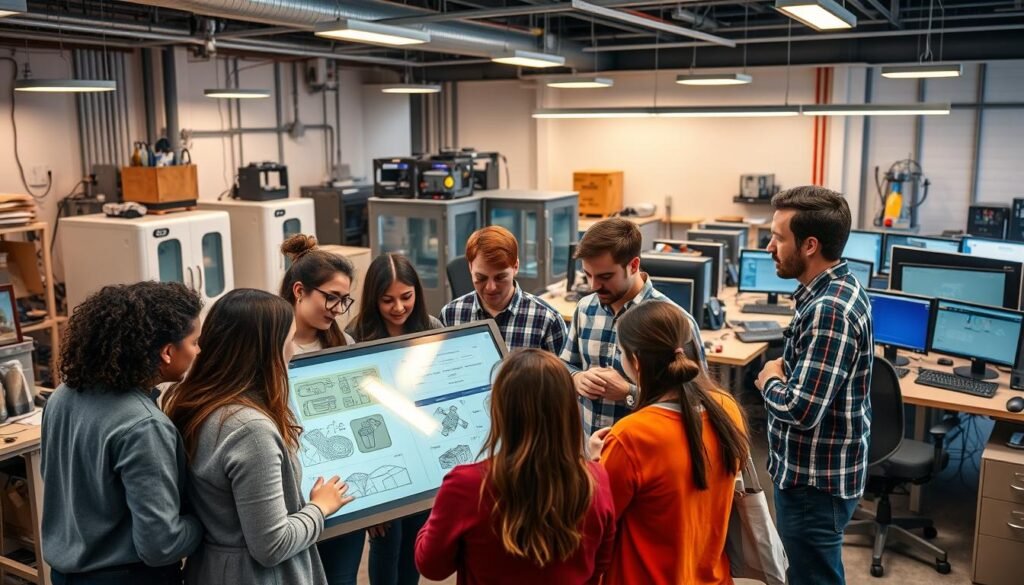
Internships are like a bridge between school and work. They make you better at technical stuff and soft skills too. These skills are important for jobs in engineering in India and other places.
Technical Skills and Application
Interns learn to use special tools like SolidWorks and ANSYS. They also get good at programming and circuit design. These skills are what companies like Tata Consultancy Services and Bosch look for.
Interns work on real projects. They learn about design, testing, and how to document their work. This helps them get ready for jobs that need their skills.
They also learn about new tech like AI and IoT. This shows them what the future of engineering might be. It makes their internship more valuable to employers.
Soft Skills Development
Interns get better at talking to teams and writing reports. They learn to explain technical stuff to others. This makes them stand out when looking for jobs.
They also learn to manage their time and meet deadlines. These skills help them do well in jobs and find more opportunities.
Working with others and being flexible are key. Interns learn to work with different teams and handle changes. These skills help them succeed in jobs and internships.
Finding Engineering Internship Opportunities

We help you find engineering internships. Start with college support, then use job sites. Take small steps to find good jobs.
Use college career centers for help. They can improve your resume and practice interviews. They also help with job fairs.
Ask professors and alumni for help. They know about job openings. They can also introduce you to people at big companies.
Look at your college’s partnerships. These can lead to internships. They often have good projects and pay.
Use job sites like Handshake and Internshala. Make sure your profile is complete. This helps you get noticed by employers.
Go to online job fairs. You can ask questions and show your interest. Employers often share special internship opportunities there.
Here’s a checklist to help you:
- Update your resume and portfolio every week.
- Set up job alerts for your dream jobs.
- Book calls with alumni or mentors.
- Prepare a short introduction for online events.
Compare different ways to find jobs. Choose what works best for you:
| Channel | Strength | Best For |
|---|---|---|
| College Career Center | Guided support, campus drives, mock interviews | Students seeking structured placement and feedback |
| Faculty & Alumni Network | Referrals, mentorship, insider openings | Research roles and niche industry placements |
| Job Boards (Handshake, Internshala) | Search filters, recruiter outreach, volume of listings | Wide range of remote and local internships |
| Company Career Pages | Direct listings from employers like Boeing and Honeywell | Brand-specific engineering internship programs |
| Virtual Events & Webinars | Real-time interaction, early access to roles | Candidates who want to network and ask technical questions |
Preparing for Your Internship Application

We help you make your application stand out. This guide covers resume tips, cover letters, and interview prep for engineering internships in India.
Crafting a strong resume
Start with a clear header and objective. Mention the roles and locations you want. List your technical skills and tools like MATLAB and Python.
Include your coursework and project entries. Name the project, your role, and tools used. Also, mention any measurable results.
Highlight any leadership roles in clubs or competitions. Show your time management and teamwork skills.
- Highlight lab experiments, capstone results, and any published work.
- Tailor each resume to the job description: mirror key phrases and required skills.
- Keep formatting simple: bullet points, one page for undergraduates, two if necessary.
Writing an effective cover letter
Use the cover letter to explain why you’re a good fit. Mention specific coursework or project experience that matches the role.
Be concise. State one or two concrete contributions you can make. Give a brief example of problem-solving and teamwork outcomes.
- Mention the role you want and how your background aligns with the team’s goals.
- Reference company work you admire: product, research, or engineering practice.
- Close with a short call to action: availability for an interview and eagerness to learn.
Interview preparation
Rehearse common technical and behavioral questions. Arrange mock interviews with your college career centre or peers. Review your resume and be ready to discuss any project detail you listed.
Practice whiteboard problems, coding exercises, and systems questions. Prepare concise STAR examples that show impact: situation, task, action, result.
Remember these steps to increase your chances of getting an engineering internship. They open doors to internships in startups, Multinational Corporations, and research labs.
What to Expect During an Engineering Internship

We explain what a typical internship day is like. This helps you know what to expect when you apply for engineering intern jobs or look for summer internships for engineers. The day can be busy with lab work or meetings. You’ll get feedback to help you grow.
Typical responsibilities and tasks
First, you might collect data, run tests, and write reports. You’ll also work on CAD models and basic coding. These tasks teach you how to follow company rules.
As you get better, you’ll do more complex tasks. You might analyze data, suggest new designs, or lead parts of projects. Your work will include reports, prototypes, test results, or clean code.
Working in a team environment
You’ll work with many teams like design, QA, and manufacturing. This helps you see how everything works together. It connects what you learned in school to real products.
The office culture values teamwork and meeting deadlines. You’ll go to meetings and learn from engineers. This helps you understand the company better.
When looking for internships, find ones that offer both solo and team work. This improves your skills and how you work with others. It also helps you get a job after the internship.
Keep a log of your work. Write down tasks, what you learned, and save your test results. This helps you show your value when applying for jobs or during reviews.
The Role of Mentorship in Internships

Mentorship turns an internship into a big chance. Mentors help you learn fast, open new doors, and teach habits that last. For engineering internships, a good mentor can change a simple job into a chance to grow your career.
Benefits of Having a Mentor
Mentors teach you quickly: they share tips and knowledge that books don’t. This helps interns learn fast and get good at their job.
Mentors guide your career: they write references, help you find jobs, and introduce you to people who can help. Many people get their first job because of a mentor’s help.
Mentors make you better: they help you know what to focus on, set goals, and understand what the company wants. This helps you do well in your internship and later in your career.
How to Find the Right Mentor
Look inside the company: find senior engineers at places like Tata Consultancy Services, Larsen & Toubro, or Mahindra Electric. Ask them for short meetings and feedback.
Use college and alumni networks: talk to professors, alumni groups at Indian Institutes of Technology, National Institutes of Technology, or placement officers. They can connect you with mentors and internships.
Be proactive: ask for short meetings, come ready with questions, and show you want to learn. Being active can turn short meetings into lasting mentorships and help you get an internship.
Turning Your Internship into a Full-Time Position

We see internships as a starting point. They are where you show you’re reliable, curious, and can make a difference. Every day, you have a chance to show you’re professional. This means being on time, clear in your communication, and following through.
Show what you’ve done. Keep a list of what you’ve accomplished. If you can, show numbers like how much time you saved or how many problems you fixed. These numbers help when people look at job openings for interns.
Impressing Your Employer During Your Internship
Take on tasks that are clear and fit with the company’s goals. Ask smart questions that show you understand what’s going on. When you get feedback, act fast and tell them how you’re doing.
Talk to your mentors and managers. Set up regular meetings, ask for advice, and find out how your work helps the company. Having people in your corner can help you get a job after your internship.
Navigating the Transition
Let your employer know you want a full-time job early on. Ask when they’ll make a decision and what they’ll look at. Companies in India and around the world have set times for hiring. Knowing this helps you plan.
If you don’t get an offer right away, stay in touch. Share what you’ve learned and any new projects you’ve worked on. Keep your resume and portfolio up to date. For tips on making a strong resume and portfolio, check out this guide.
Get ready for a bigger role. Full-time jobs need more knowledge, responsibility, and teamwork. Make a plan to learn more and fill in any gaps you noticed during your internship. This will make you a stronger candidate when new jobs come up.
- Treat each task as an interview: be on time, ask smart questions, and follow up.
- Document measurable contributions: have numbers and results ready for talks about your performance.
- Keep mentors as advocates: get recommendations and inside help.
- Maintain momentum after the internship: keep your portfolio updated and keep learning.
Success Stories: Engineers Who Started as Interns

We share stories of how internships led to big career wins. These tales come from aerospace, manufacturing, and more. They show how to find and make the most of internships.
Case study — Aerospace and defense
At Boeing, interns did big tasks and then moved to design. They worked with senior engineers and got jobs.
Case study — Manufacturing and industrial
Honeywell and Vertiv interns tested products and managed their life cycles. They kept detailed logs and presented weekly. This led to jobs in quality and product engineering.
Case study — Civil and construction
Kiewit and Kimley-Horn interns worked on sites and in offices. They learned about surveying and structures. Their hard work led to project-engineer roles.
Case study — Software and electronics
Interns at big firms built features and fixed bugs. They got mentorship and learned a lot. At startups, they owned modules and shipped products fast. Both paths led to development jobs.
Lessons learned from their experiences
- Start early and be proactive: applying for engineering internships increases exposure and options during final years.
- Embrace varied environments: internships at large firms and startups teach different skills; choose based on growth goals.
- Network and seek mentors: relationships formed during internships often open doors to longer-term roles.
- Document achievements and ask for feedback: clear records of impact can convert short-term projects into career opportunities.
Future Trends in Engineering Internships
Internships are changing fast. Companies are now open to hiring from anywhere. This means students in India can work with teams worldwide.
Platforms like Handshake help find these jobs. But, it’s important to be good at talking and working alone.
Remote and Hybrid Opportunities
Virtual internships make it easier to get jobs. You need to be good at managing time and working online. Hybrid roles mix hands-on work with remote tasks.
Emerging Internship Fields
New fields like renewable energy and AI are in demand. Startups offer quick learning, while big companies teach more. These areas match India’s goals and boost job chances.
To find jobs, search online for “engineering intern job openings.” Use filters for paid jobs. For help, call +91 8927312727 or email info@nextstep.ac.