

Did you know nearly half of Indian students leave school after Class 10? They often don’t know what to do next. But, many could start working in a year with the right training.
This is both a problem and a chance. Choosing the right Vocational Course After 10th can give you an early career boost.
We made this guide for students, teachers, and engineers. It helps find the best career paths after 10th. Vocational courses are quick, affordable, and get you ready for jobs fast.
Some courses even prepare you for jobs in just under a year.
We’ll look at courses in tech, healthcare, hospitality, and more. We’ll talk about how to pick the right program, financing, success stories, and starting your career.
For help or to sign up, call us at +91 8927312727 or email info@nextstep.ac. We aim to make learning fun and easy. We want to inspire the next generation of skilled workers.
Understanding Vocational Courses and Their Importance

We look at hands-on learning that leads to real jobs. Vocational courses teach skills for quick job entry. They offer clear paths for students after Class 10.
What Are Vocational Courses?
Vocational education trains for specific jobs. Schools like ITIs and online providers teach IT, web development, and more. You can learn about cosmetology, plumbing, and medical assisting too.
These courses last from a few weeks to three years. You can learn online, in class, or a mix of both. Places like Penn Foster and Climb Hire offer these options.
Benefits of Choosing Vocational Training
Vocational programs get you to work fast. They’re cheaper than college and some are free. You can earn money sooner.
These courses make you job-ready with certifications. They also teach soft skills and help find jobs. This way, you’re ready for the workforce.
Starting early, you can earn money or start your own business. You can also go for more studies later. It’s a smart choice for Indian students too.
Popular Vocational Courses Available After 10th Grade
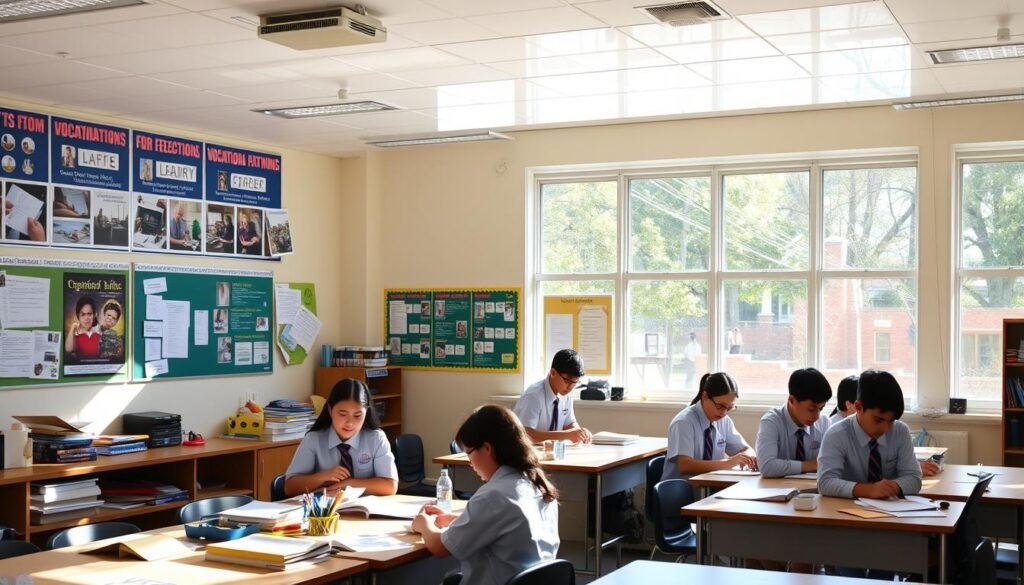
We help students find real-world options after 10th grade. These paths cut down training time and build useful skills. There are many choices like technical trades, hospitality, health, and creative arts.
Technical Diploma Courses
Technical programs teach skills like electrician, fitter, and plumbing. Polytechnic diplomas cover mechanical, civil, and computer science. Short IT courses teach IT support, web development, and basic cybersecurity.
Course lengths vary. ITI courses last 1–2 years, polytechnic diplomas about 3 years. Short IT tracks last 4–24 weeks. Jobs include electrical technician, mechanic, and junior web developer.
In India, starting pay is ₹10,000–₹30,000. It depends on the job and employer.
Hospitality and Culinary Arts
Hospitality programs teach hotel management and food production. Culinary courses focus on kitchen skills and menu planning. Students get hands-on training in real kitchens and hotels.
Course lengths range from 6 months to 3 years. Jobs include chef assistant, front-desk executive, and kitchen staff. Many start their own catering or small-restaurant businesses.
Health and Medical Courses
Short programs prepare learners for roles like medical assistant and lab technician. Providers like Propel America offer tuition-free training in the U.S. Similar programs exist in India.
These courses last 6 months to 2 years. Graduates work in clinics, labs, and hospitals. Programs include internships and certification to boost employability.
Creative Arts and Design Programs
Creative paths include fashion design, graphic design, and multimedia. Institutes like Aveda offer cosmetology training that combines aesthetics with salon practice.
Students learn skills like Photoshop and Illustrator. Certificate programs last 6 months to 1 year. Diploma programs can last 3 years. Online platforms offer extra modules for technical and creative skills.
Students get industry-recognized certifications, hands-on labs, internships, and job placement support. Choosing a vocational Course After 10th or a job-oriented course helps learners start their careers sooner with practical experience.
Factors to Consider When Choosing a Vocational Course

Choosing the right path after class 10 is key. We look at practical things so you can find the right training. This guide helps you compare different options.
First, think about what you like and what you’re good at. Some like hands-on work, while others prefer learning in a classroom. Tests and career advice can help figure out what’s best for you.
Then, look at the job market in your area. Jobs in health care, IT, and trades are in demand. Check local job sites to see what’s needed.
Make sure the course is recognized. Look for NSDC or NCVT approval. This helps you get jobs and move up in your career.
Think about the course details. How long is it? How much does it cost? Does it offer job help? On-campus or online, choose what fits your life.
Check if you need a certain age or grade to start. Some programs have rules. Also, see if you can get help with language if needed.
Look at who teaches the course. Good teachers make a big difference. Also, see how well graduates do in their careers.
Use the table below to compare courses. It helps you see what’s important for you.
| Factor | What to Check | Why It Matters |
|---|---|---|
| Course Type | vocational programs after 10th, skill development courses after 10th, certificate courses after 10th | Duration and scope differ; choose based on career horizon and urgency to enter workforce. |
| Accreditation | NSDC, NCVT, ITI, recognized online providers | Determines employability, government job eligibility, and credit transfer options. |
| Placement Support | Internships, campus drives, employer tie-ups | Direct impact on job-readiness and first-role quality. |
| Cost & Funding | Tuition, tool fees, scholarships, state-funded schemes | Affordability affects completion rates and early career savings. |
| Faculty & Industry Links | Trainer experience, live projects, corporate partnerships | Improves practical skills and network access for placements. |
| Mode of Delivery | On-campus, online, hybrid | Choose based on access to equipment and learning style. |
| Regional Demand | State job portals, local employer needs, sector growth | Aligns training with nearby opportunities to reduce relocation costs. |
Benefits of Vocational Training for Career Growth

Practical learning speeds up career growth. Vocational training after 10th offers hands-on learning. It includes labs, real projects, and simulated tasks.
Programs like Climb Hire and Aveda focus on practical skills. They use tech simulations to improve both technical and soft skills.
Skill Development and Practical Experience
Students learn by doing in workshops. They work with real equipment and tools. This makes them ready for the job world.
Soft skills like communication and teamwork are also taught. These skills help with interviews and job success.
Shorter Duration than Traditional College
Job courses after 10th are shorter, lasting from months to two years. Programs like six-month IT support courses let students start work quickly and save money.
In India, certificate courses and polytechnic diplomas are flexible. They last from 6 to 24 months or three years. This helps learners get into the workforce faster.
Higher Employability Rates
Training that matches industry needs leads to more jobs. Programs with employer partnerships have high hiring rates. They open doors in healthcare, IT, hospitality, and trades.
Vocational training can lead to apprenticeships, government jobs, or starting a business. It’s affordable and offers work experience. This helps learners move up in society.
For more information on vocational courses, check out this guide: job-oriented courses after 10th.
Short, focused training is a smart choice. Employers want graduates ready to work in technical and service roles.
Overview of Career Options After Completing Vocational Courses

We show how vocational courses lead to jobs and business chances. A Vocational Course After 10th opens doors to entry-level jobs. Students get hands-on skills and market exposure.
We list common jobs, starting pay in India, and next steps. This helps families and students see short-term earnings and long-term career paths.
Job Types in Technical Fields
Technical diplomas lead to jobs like IT support, web development, and electrician work. Starting salaries are ₹10,000–₹30,000, based on location and credential. Many graduates move up through apprenticeships or diploma-to-degree bridges.
Opportunities in Healthcare
Certificates and diplomas qualify for medical assistant and lab technician roles. Hospitals in big cities hire directly from these programs. Some courses offer employer interviews or credit for nursing degrees.
Careers in Hospitality and Tourism
Diplomas in hotel management and culinary arts prepare for jobs in hotels and restaurants. Training includes kitchen and front-desk simulations. Graduates work in hotels, restaurants, and travel agencies in India and abroad.
Vocational alumni start small businesses or freelance. Many institutes offer pathways to college credits, making it easier to advance.
| Sector | Typical Roles | Entry Salary Range (₹/month) | Next Steps |
|---|---|---|---|
| Technical | IT support, electrician, HVAC, mechanic, renewable-energy technician | 10,000–30,000 | Apprenticeship, advanced diploma, government recruitment |
| Healthcare | Medical assistant, lab tech, pharmacy tech, CNA, EMT | 12,000–28,000 | Specialization, diploma-to-degree credit transfer, hospital roles |
| Hospitality & Tourism | Front office, chef assistant, hotel operations, travel coordinator | 10,000–25,000 | On-the-job training, certifications, international placements |
| Entrepreneurship / Freelance | Small repairs, catering, salons, freelance design, consulting | Varies widely | Business courses, incubation support, microloans |
When picking a Vocational Course After 10th, think about earnings, skills, and certification value. The right job-oriented courses after 10th can lead to quick employment and future studies.
How to Choose the Right Vocational School
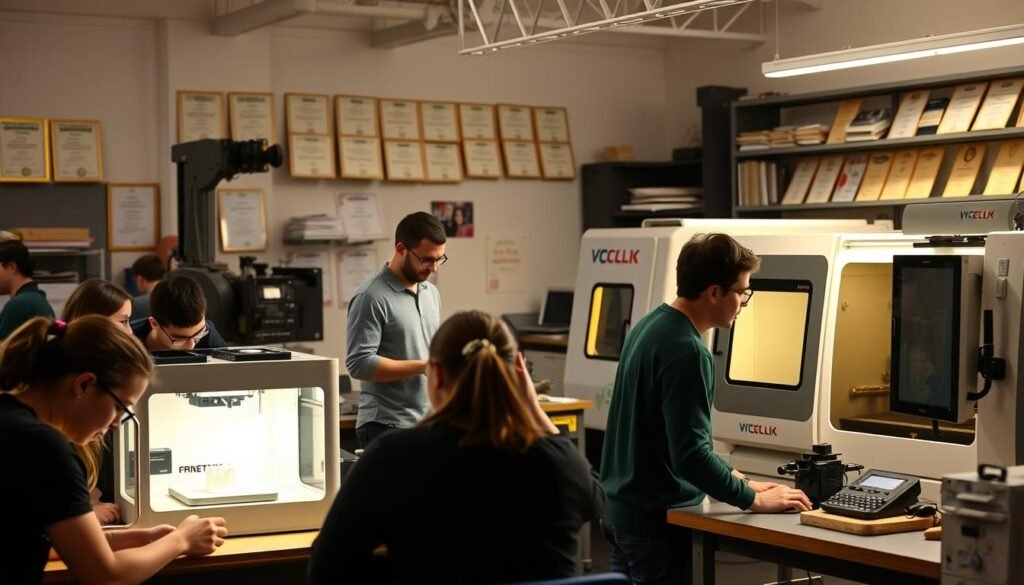
We help students and families find the right vocational school. Choosing the right school is important for your future. It affects your training, job chances, and growth.
Researching School Reputation
First, check if the school is accredited. Look for NCVT or NSDC in India. This means the school meets national standards and your certificate is accepted by employers.
Then, look at job placement rates and who hires graduates. Ask for recent numbers and names of companies. Make sure the school can back up these claims.
Read what past students say and check online reviews. Talking to former students gives you a true picture. You’ll learn about campus life, job connections, and the value of vocational programs after 10th.
Reviewing Curriculum and Faculty
Make sure the curriculum has hands-on labs and up-to-date tech. Look for certifications like CompTIA A+ or Google certificates. These increase your job chances after 10th.
Also, check for soft-skills classes. Skills like communication and teamwork are important. Employers want you to be ready for the workplace.
Look at your teachers’ experience. Choose schools with teachers who have real-world experience. Their connections can help you find jobs and internships.
Financial Aid and Scholarships
Compare costs, payment plans, and scholarships. Some programs are free or have grants. Look for Job Corps and Climb Hire in the US, and NSDC-affiliated programs in India.
Ask about government help, scholarships, and fee waivers. Check if you qualify before applying to certificate courses after 10th.
Find out if you need to buy equipment. Hidden fees can add up. Ask for a detailed fee list.
Other things to check:
- Campus facilities and workshop quality.
- Internship and placement support with tracking of employer hires.
- Student-to-faculty ratio for personalized training.
- Mode of delivery: in-person, hybrid, or online—match this to your learning needs.
- Admission prerequisites, including age limits or income criteria for funded schemes.
For exact job stats and alumni contacts, call +91 8927312727 or email info@nextstep.ac. Talking directly to the school gives you the real story, not just what they say in brochures.
| Check | Why It Matters | Red Flags |
|---|---|---|
| Accreditation (NCVT/NSDC) | Validates training standards and certificate acceptance | No accrediting body listed or unclear paperwork |
| Placement Rate & Employers | Shows real job outcomes for vocational programs after 10th | Vague percentages or no employer names provided |
| Curriculum & Certifications | Ensures hands-on skills and industry credentials | No lab access or outdated course content |
| Faculty Experience | Industry-experienced trainers increase hireability | Only academic staff with no industry background |
| Financial Aid Options | Makes certificate courses after 10th affordable | No transparent fee structure or hidden charges |
| Mode of Delivery | Matches learning style: in-person, hybrid, online | Unclear schedules or insufficient practical sessions |
| Internship & Equipment | Hands-on placement and tools for real work experience | No internships offered or students must buy expensive gear |
Success Stories of Vocational Program Graduates
We share real stories to show how vocational education changes careers. These stories come from the U.S. and India. They show how programs can lead to jobs and success.
Inspiring Journeys in Skilled Trades
Climb Hire says over 80% of its graduates get jobs in a year. They start with salaries around $50,000. Pursuit also shows quick success, with over 80% in tech jobs in six months.
In India, ITI and polytechnic graduates find jobs in construction and more. They learn by doing and get certified. This means they can start working right away.
Testimonials From Culinary Program Alumni
Aveda Institutes focus on hands-on learning and being green. Graduates pass exams and get jobs in salons and hotels. Short culinary programs also lead to jobs in kitchens and hotels.
Alumni talk about learning important skills like mise en place and time management. Career services help them find jobs. Students who choose vocational training after 10th get jobs faster.
Lessons and Patterns From Successful Programs
Success comes from certification, employer ties, and lots of practice. Career coaching and alumni networks also help. Programs that teach both skills and soft skills do best.
Vocational training after 10th is a smart choice. It leads to jobs when schools work with employers and provide real labs. It changes lives when it all comes together.
Financing Your Vocational Education
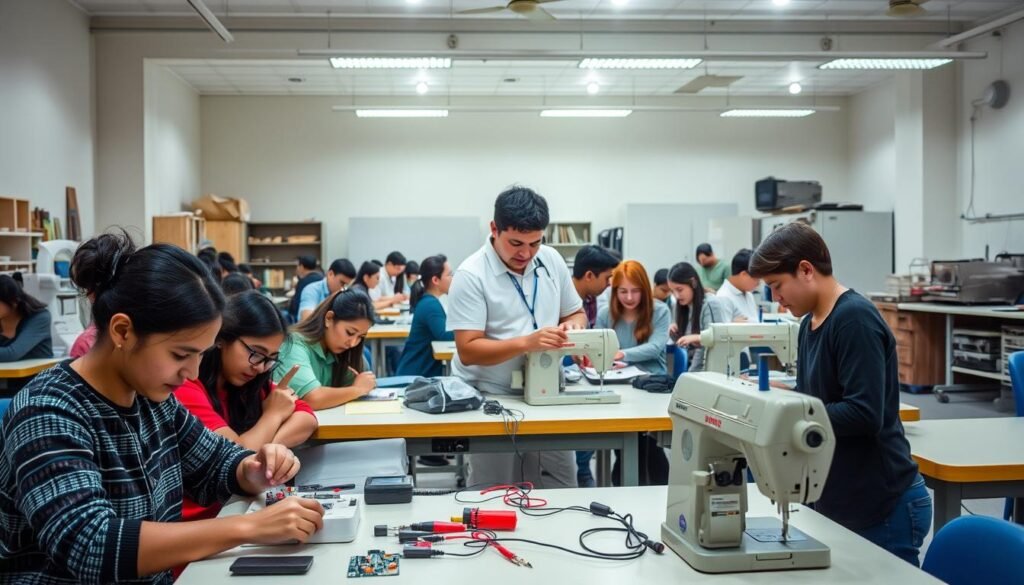
Cost is a big worry when thinking about Vocational Course After 10th. Prices change based on where you are, who you’re learning from, and how you learn. Knowing your budget helps you choose the right course for your money and career goals.
Understanding Tuition Costs and Fees
Tuition prices vary a lot. Schools like Aveda Institutes might charge between $15,000 and $25,000 for full programs. Online schools like Penn Foster offer certificates from $500 to $2,600. Merit America has focused programs at about $5,700 with special payment plans.
In India, courses after 10th can cost a few thousand rupees to a few thousand rupees for diplomas. Government programs like ITI and Skill India might not charge fees for some. Always check if fees include exam or job help to avoid extra costs.
Exploring Scholarships and Grants
Scholarships and grants can help pay for vocational programs after 10th. Nonprofits and local groups might cover all costs. In India, NSDC and state scholarships help many students.
Private schools might offer money based on grades or need. Apply early and have your documents ready. This increases your chance of getting a scholarship.
Loan Options for Vocational Training
Loans can help pay for diplomas and some certificates after 10th. Terms vary by lender and program. Some banks in India offer loans for vocational training at approved schools.
Look for payment plans or income-based options. Always check if the lender accepts the school’s accreditation and understand repayment plans before borrowing.
To save money, consider part-time or online courses. Look for programs that include exam fees and job help. Compare costs of different options.
| Expense Type | Typical Range | Cost-Saving Tip |
|---|---|---|
| Short Certificate (online) | $500 – $2,600 / ₹5,000 – ₹40,000 | Choose self-paced modules; apply promo scholarships |
| Diploma (campus-based) | $1,500 – $25,000 / ₹20,000 – ₹200,000 | Look for government-subsidized ITI or Skill India seats |
| Bootcamps & Workforce Programs | $1,000 – $6,000 / ₹10,000 – ₹50,000 | Seek income-contingent or deferred payment plans |
| Scholarships & Grants | Full to partial coverage | Apply early; prepare income and academic documents |
| Education Loans | Depends on lender; interest varies | Verify accreditation; compare EMIs and moratoriums |
Need help with payment plans or finding scholarships? Call us at +91 8927312727 or email info@nextstep.ac. We help you find ways to fund your Vocational Course After 10th and start a meaningful career.
Tips for Excelling in Vocational Courses

Vocational training after 10th opens doors fast. Students need to work hard and get practical experience. Make a plan to learn well: set goals, track hours, and keep a progress log.
Importance of Networking and Mentorship
Make friends with teachers, industry people, and alumni. Good connections help you find jobs faster. Go to job fairs and meetups to meet people who can help you.
Join alumni groups and professional clubs. Even small talks can lead to jobs or mentors. Look at vocational course options for more info.
Effective Study Habits and Time Management
Make a study plan that mixes lab work with theory. Use short times for hands-on tasks and longer times for reading. Set weekly goals to stay on track.
Stay in touch with teachers for feedback. Be on time, keep projects organized, and write notes after each session. These habits help you do well in vocational courses.
Gaining Hands-On Experience
Do internships, apprenticeships, and work with clients. Live projects and simulations help build a portfolio. For developers, use GitHub; designers, make sample designs; technicians, document projects.
Practice for interviews and work on your resume. Skills like teamwork and communication are just as important as technical skills. See vocational training as the start of your learning journey. Keep learning and getting new skills to stay ahead.
Preparing for Your Future Career After Vocational Training
We start by making training useful for jobs. A Vocational Course After 10th should show your skills on your resume. For tech jobs, list tools, programming skills, and project results.
For trades and hospitality, mention hands-on experience, client work, and internships. Use bullet points to show what you’ve done, like building things or improving services.
Creating a Professional Resume
Make each resume fit the job you want. Use keywords from the job ad and highlight your internships or projects. Use short sentences that show your impact, like saving time or improving service.
For courses after 10th, list certifications and hours first. This shows you’re ready for the job.
Interview Tips and Job Search Strategies
Practice for interviews and tech demos. Learn about the company’s tools and how they work. Use job boards, apprenticeships, and online resources to find jobs.
Networking can help you get hired. Use sites like GitHub, LinkedIn, or Behance for tech jobs. Talk to people in your field for more chances.
Continuing Education and Certifications
Think about your next steps. Get more certifications or diplomas. Many vocational credits can lead to higher education.
Short online courses keep your skills up to date. Choose accredited courses to keep your credits valuable.
A Vocational Course After 10th is a smart choice for a job. Look for accredited programs and get hands-on training. For help in India, call +91 8927312727 or email info@nextstep.ac. We’re here to help you succeed in your career.