

Nearly 60% of Indian employers now say they prefer candidates with demonstrable skills over traditional degrees—a shift that reframes the Vocational Education Scope as central to workforce planning.
Vocational education is a hands-on way to learn. It mixes classroom learning with real-world skills. Students learn things like electronics and entrepreneurship early on.
This helps them move into jobs easily and feel included in society.
Today’s programs cover many areas, like digital marketing and app development. This shows how vocational courses prepare students to start working right away.
Online platforms like Coursera and Udemy make learning easier. They offer certifications that match what employers want. With EdTech growing and new policies, more people are getting career-focused education in India.
For more information, call +91 8927312727 or email info@nextstep.ac.
Understanding Vocational Education
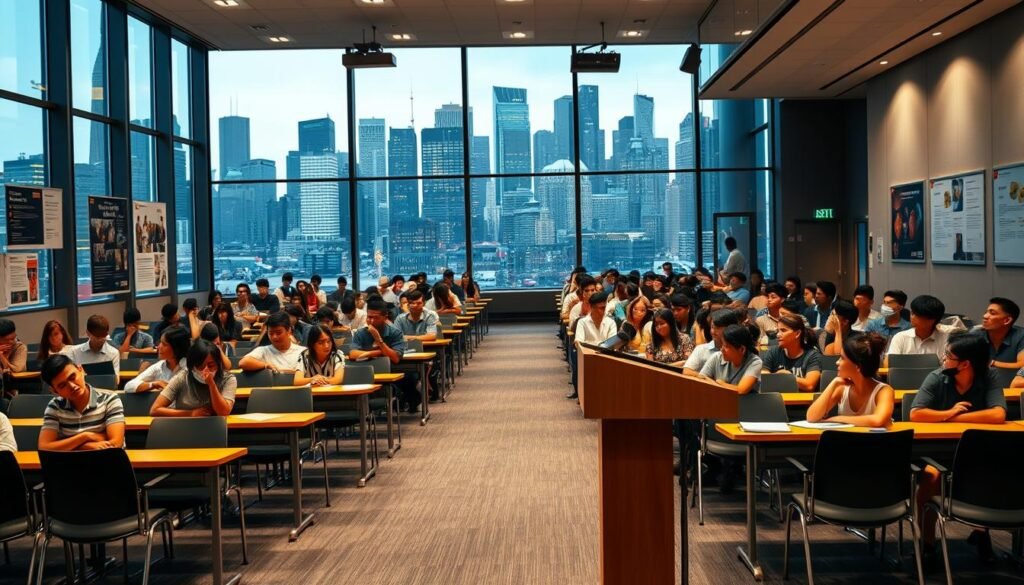
Vocational education is a hands-on way to learn for jobs and starting businesses. It mixes learning in class with real-world practice. This helps students and workers find their way in the job market.
Definition and Importance
Vocational education teaches skills for jobs, not just school subjects. It helps students get jobs right away. It also helps adults learn new skills.
Learning vocational skills boosts confidence and teaches real skills. It also helps people start their own businesses. This way of learning is flexible and supports learning for life.
Key Features of Vocational Education
Classes are based on what employers need. You learn about things like coding and AI. You get to practice in real settings and meet industry experts early on.
There are many ways to learn technical skills. You can use virtual labs and AI to practice. Courses are designed to fit changing job needs.
Our programs focus on getting you a job. You’ll get feedback from industry experts and work with big companies. This makes vocational education valuable for both students and employers.
Current State of Vocational Education in India
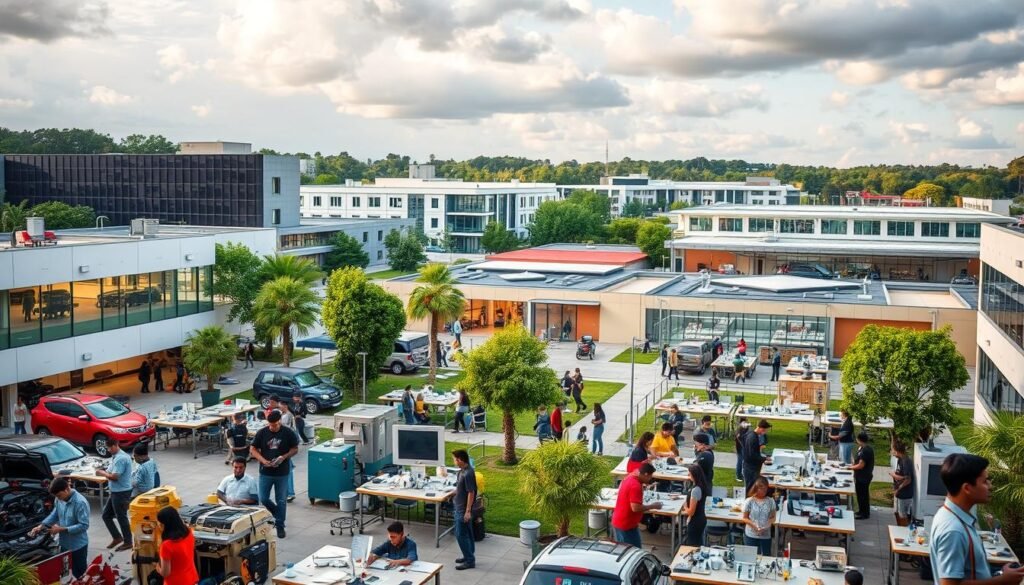
We look at vocational learning in India. We use data from national programs, school integration, and program diversity. This gives us a clear picture of how many students are learning these skills.
More students are joining vocational programs. This includes Industrial Training Institutes, PMKVY, school-based schemes, and community programs. There are about 15,034 ITIs in the country, with both government and private ones.
The Craftsmen Training Scheme helps about 2.65 million students every year. PMKVY has trained over 16 million people. These numbers show how many students are getting vocational training in India.
Formal schooling is playing a big role. The National Education Policy 2020 wants 50% of students to learn vocational skills by 2025. In 2024–25, over 1.7 million students chose vocational subjects in 23,752 CBSE schools.
This move links secondary education to skill standards. It helps students get ready for the job market.
Programs are reaching out to rural areas. PMKVY and Jan Shikshan Sansthan are helping people in rural areas. Jan Shikshan Sansthan aims to help about 2.818 million people by 2025–26.
There are many types of programs. You can learn short-term skills, traditional trades, or even tech skills like AI and web development. This variety helps students find the right path for their future.
India has a lot of schools and institutions. EdTech platforms and hybrid models are also helping. The budget for 2025–26 is about ₹1.28 trillion. This money will help grow vocational programs and improve outcomes.
Here’s a quick look at how students are joining vocational programs. It shows where the focus is and where there might be gaps.
| Channel | Scale / Reach | Typical Programs | Primary Outcomes |
|---|---|---|---|
| Industrial Training Institutes (ITIs) | ~15,034 ITIs; 14,643 involved in Craftsmen Training, ~2.65M trainees annually | Electrical trades; computer hardware; fitters; turners; data entry | Trade certification; apprenticeship eligibility; employable technicians |
| Pradhan Mantri Kaushal Vikas Yojana (PMKVY) | Trained >16 million candidates; wide national network | Short-term skilling; industry-aligned skill certificates; sector-focused modules | Quick employment; micro-entrepreneurship; entry-level job readiness |
| School-based Vocational Courses (NEP & CBSE) | 1.7M+ students in 23,752 CBSE schools (2024–25) | NSQF-aligned secondary courses; foundational tech and trades | Early career exposure; clearer pathways to higher technical courses |
| Community Programs (JSS and local NGOs) | JSS target: ~2.818M beneficiaries (FY2022–23 to FY2025–26) | Local trades; livelihood skills; women-focused training | Local employment; income generation; community capacity building |
| EdTech & Hybrid Providers | Millions of course completions; eSkill India >2M tech completions | Online courses in AI, web development, digital skills; blended learning | Flexible upskilling; digital credentials; pathway to formal programs |
We keep watching how vocational training is changing. For more information, call +91 8927312727 or email info@nextstep.ac.
Government Initiatives Supporting Vocational Education

We look at how the government is helping with vocational education. They make learning more practical and connect it to jobs. This helps students and businesses a lot.
Skill India Mission
The Skill India and Pradhan Mantri Kaushal Vikas Yojana (PMKVY) are big pushes for more skills. PMKVY has trained many in IT, electronics, retail, and logistics. It uses certifications to help people get jobs faster.
Government sites like eSkill India work with big names like IBM and Microsoft. They offer more career choices and make learning digital and AI-ready. This helps both city and country learners.
National Apprenticeship Promotion Scheme
The National Apprenticeship Promotion Scheme is about learning on the job. It’s like Germany’s apprenticeships, where schools and companies work together. This makes it easier to get a job after school.
NEP 2020 and Samagra Shiksha Abhiyan support this idea. They want students to start learning about jobs early and fund courses that match industry needs. More money for education and digital projects helps show the value of vocational learning.
It’s important to keep learning practical and relevant. We need to reach more schools, fund labs and trainers, and connect schools with businesses. This makes vocational education better and reaches more people.
| Initiative | Focus | Impact on Learners |
|---|---|---|
| PMKVY (Skill India) | Short-term certified skilling across sectors | Recognition of skills, increased placements, cross-sector mobility |
| eSkill India & Industry Partnerships | Digital courses and hybrid learning with corporate partners | Access to new technologies, employer-linked credentials, scalable programs |
| National Apprenticeship Promotion Scheme | Apprenticeships combining classroom and workplace training | Smoother transition to jobs, industry mentorship, practical experience |
| NEP 2020 & Samagra Shiksha | Vocational exposure from Grade 6; NSQF-aligned secondary courses | Early career exploration, standardized pathways, broader participation |
| Union Budget 2025–26 | Increased education funding and support for AI/hybrid models | Expanded infrastructure, teacher training, enhanced vocational education benefits |
Contact us at +91 8927312727 or info@nextstep.ac to talk about how these programs can help locally. We can also help schools match what they teach with what employers need.
Role of Private Sector in Vocational Training
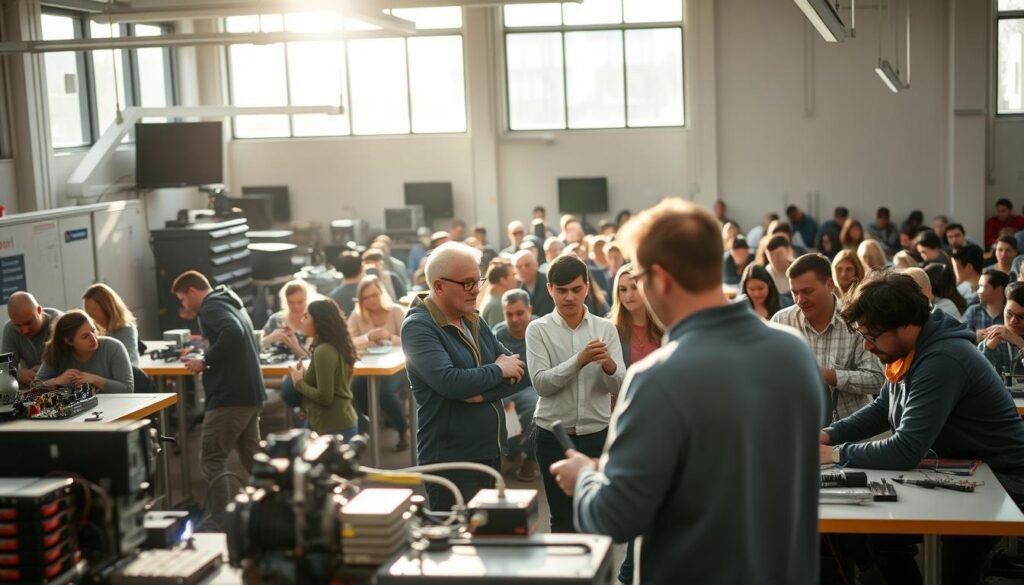
The private sector is key in changing technical education. Companies offer real-world skills and curricula that match the job market. This helps students and workers get ready for jobs.
At schools and colleges, big names like IBM and Microsoft work with tech schools. They introduce new skills and hands-on learning. This makes more job-ready options and helps students find jobs.
Partnerships with Educational Institutions
We work with schools and tech institutes to make learning relevant. EdTech platforms like Coursera offer courses in AI and more. These courses are certified and recognized worldwide.
These partnerships offer flexible learning paths and global recognition. Schools get to update their labs and teaching methods. Students get clear paths to apprenticeships and jobs.
Corporate Training Programs
Companies use new learning methods to train staff. They offer short courses and in-house training. This helps employees get better at their jobs.
Private providers offer training for career changers. Companies get skilled workers, and employees get skills they can use anywhere.
| Partner Type | Typical Offerings | Key Benefit |
|---|---|---|
| Large IT Corporations | Curriculum co-design, internships, certification tracks | Work-ready graduates with sector-specific skills |
| EdTech Platforms | Online courses, micro-credentials, project portfolios | Scalable access to technical skills development |
| Manufacturing Firms | Shop-floor apprenticeships, dual-training models | Hands-on exposure and reduced skill gaps |
| Private Training Institutes | Short vocational programs, placement support | Flexible vocational school options for learners |
Policymakers can use Public-Private Partnerships to improve training. For more on PPPs and challenges, see here.
Call us at +91 8927312727 or email info@nextstep.ac. Let’s work together to improve vocational training and skills development.
Emerging Trends in Vocational Education
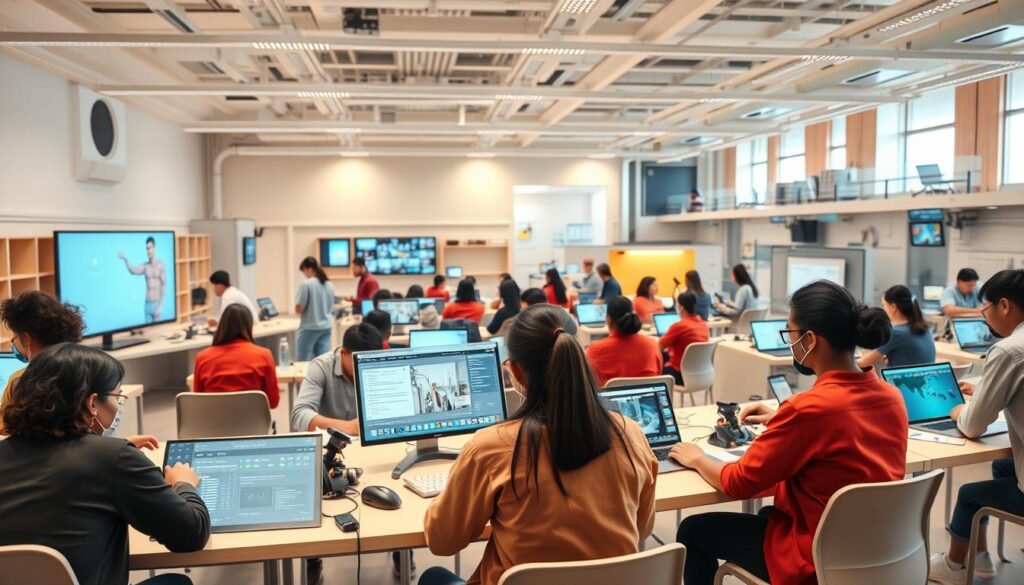
How we learn practical skills is changing fast. New ways of teaching and learning are coming up. This short overview shows the big changes in vocational education today.
Online Learning Platforms
Online learning has made courses easier to get in India. Sites like Coursera, Udemy, UpGrad, and Simplilearn make learning skills easier. They help people learn from home.
Virtual labs and simulations help with hands-on training. Students in medical, automotive, and engineering fields can practice safely. AI helps make learning faster and more focused.
Now, we have shorter courses, micro-credentials, and mixed learning. This includes online study and hands-on labs. eSkill India shows millions have learned tech skills, meeting big demand.
Industry 4.0 and Its Impact
Industry 4.0 is changing what we learn in schools and colleges. Automation, IoT, data analytics, cloud computing, and cyber security are key. These are now part of many training programs.
Employers want people who can solve problems and have technical skills. Vocational programs focus on making sure graduates can start working right away.
Research and partnerships are helping make these changes. This study on vocational research and trends is a good place to start. You can find it at vocational research and trends.
Vocational education also helps people start their own businesses. Learning practical skills and basic business knowledge helps. This way, learners can start their own repair shops, service centers, or digital startups.
| Trend | Practical Effect | Example Technologies |
|---|---|---|
| Online vocational learning | Wider access; flexible schedules; micro-credentials | MOOCs, virtual labs, AI tutors |
| Industry 4.0 vocational impact | New trades; demand for digital skills; automation-ready workforce | IoT, robotics, cloud, data analytics |
| Competency-based job-ready training programs | Performance-focused assessments; faster workplace entry | Skill badges, project portfolios, industry assessments |
| Inclusive and green skills | Broader participation; sustainability-oriented jobs | Renewable tech, eco-friendly manufacturing, accessible design |
To understand enrollment trends and research from 2020–2024, look at bibliometric analyses. These studies show how topics have changed. This helps schools plan for the future.
Want to know more about blended learning? Call us at +91 8927312727 or email info@nextstep.ac. We work with industry and educators to create vocational courses that meet market needs.
Challenges Facing Vocational Education
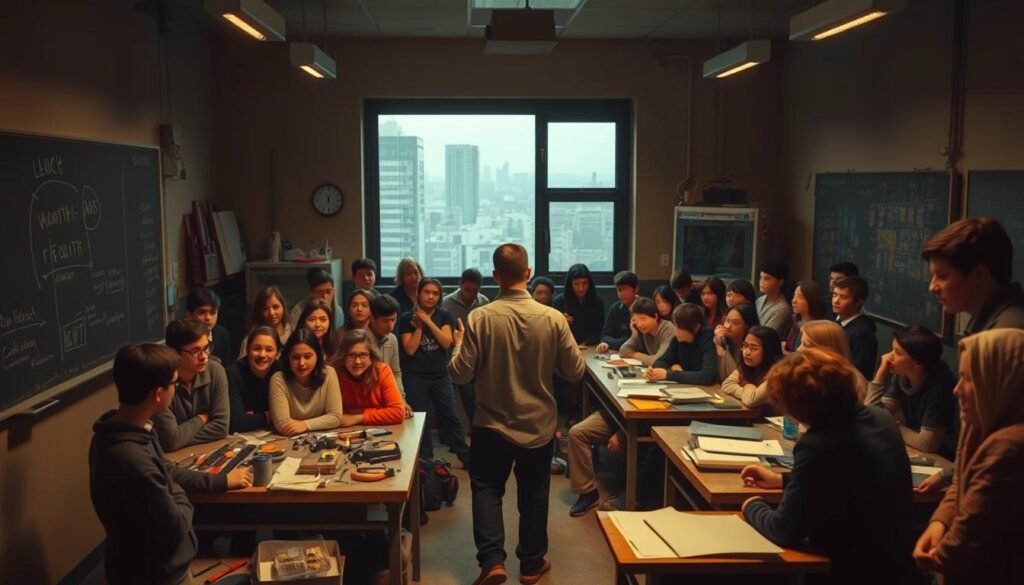
We face many barriers in making vocational education better in India. These include social views, classroom quality, funding, and digital access. We need strategies that link schools, industry, and policy makers.
Perceptions and Stigmas
Many families see technical trades as a last choice. This view lowers student interest and limits candidates for jobs like advanced manufacturing.
We can change this by showing the value of vocational training. School visits to places like Bosch and Tata, stories of apprentices at Mahindra, and career fairs can help. They show that vocational paths lead to good jobs and more learning.
We need to tell everyone that vocational paths lead to skilled jobs and more. We should talk to parents, counselors, and industry leaders to change how people see vocational training.
Infrastructure and Funding Issues
Many schools lack modern labs and trained teachers. This gap makes it hard for students to meet employer needs.
Also, the digital divide is a big problem. Rural and smaller towns have little internet and can’t afford devices. Without internet, students miss out on learning and assessments from industry.
New policies have started to address funding. But we need more money for equipment, maintenance, and teacher training. We must watch how these funds are used to make sure they help everyone.
We suggest three steps:
- Programs to improve how people see vocational training.
- Grants and funding from both public and private sectors to fix infrastructure and funding.
- Efforts to get more devices and internet access to close the digital gap.
We need to work together to overcome these challenges. Strong connections between schools and industry, clear job paths, and more investment in facilities and teachers will help. This will make vocational education better and more consistent everywhere.
| Challenge | Key Barrier | Practical Response |
|---|---|---|
| Perceptions of vocational training | Social bias toward academic tracks; low awareness of career value | Outreach campaigns, industry site visits, apprenticeship showcases |
| Infrastructure and funding issues | Old equipment, weak maintenance budgets, teacher skill gaps | Capital grants, public–private funding, regular instructor training |
| Digital divide | Poor connectivity in rural and tier-2/3 areas; lack of devices | Regional learning hubs, subsidized devices, low-cost data plans |
| Scale and quality assurance | Inconsistent NSQF alignment; varied employer recognition | Standardized assessments, employer partnerships, accreditation support |
| Policy implementation | Local capacity gaps; uneven monitoring | Capacity building, clear KPIs, regular audits and feedback loops |
For program inquiries and partnerships contact +91 8927312727 or info@nextstep.ac.
The Future of Vocational Education in India
Vocational learning is changing. It’s moving from just trade skills to tech-enabled paths. Courses will include AI, blockchain, and data analytics, while keeping hands-on skills.
Early school programs will start teaching entrepreneurship. This will make learning more inclusive for everyone.
Predictions for 2025 Trends
By 2025, more students will pick skill-based credentials. NITI Aayog says vocational graduates get jobs easier. Micro-credentials and stacked certificates will help learners plan their careers.
Institutions like IITs and Tata Institute will start hybrid apprenticeships. These will be like those in Switzerland and Germany.
Lifelong learning will become common. People will keep learning new skills as they work. Public and private groups will work together to make training affordable. EdTech will help reach more people in smaller cities.
Impact of Technology on Learning
AI tutors will make learning personal and fast. Virtual labs with VR and AR will let students practice safely. Blockchain will make sure credentials are real and easy to check.
Data analytics will help update curriculums based on job needs. Hybrid learning will mix online and in-person learning. We’ll see policies for using AI responsibly in schools, like Ohio’s.
Contact us at +91 8927312727 or info@nextstep.ac for more information.
| Trend | Technology/Approach | Expected Effect on Vocational Training Outcomes |
|---|---|---|
| Personalized Learning | AI tutors, adaptive platforms | Faster skill mastery, higher retention, targeted remediation |
| Immersive Practice | VR/AR labs | Safe hands-on experience, improved employability, reduced equipment costs |
| Credentialing | Blockchain-based certificates | Verifiable credentials, easier hiring, lower fraud |
| Modular Pathways | Micro-credentials, stacked certificates | Flexible career progression, lifelong learning, higher labor market alignment |
| Scalable Delivery | EdTech platforms, hybrid models | Greater access in smaller towns, cost efficiency, consistent quality |
Benefits of Vocational Education

Vocational programs bridge the gap between school and work. They focus on practical skills. This leads to quick job entry and clear career paths.
Career-focused education offers direct job paths. It includes short and micro-credentials for IT, manufacturing, and more. Tata Consultancy Services and Maruti Suzuki place many graduates.
These programs lead to more job chances. PMKVY and Industrial Training Institutes help millions. They prepare for work and support starting businesses.
Vocational education also helps socially and regionally. It brings skills to rural areas. This strengthens communities and boosts India’s talent pool.
Technical skills are key to national success. Countries like Singapore saw growth from early vocational training. India can follow this path for economic growth.
For lasting success, mix on-the-job training with short courses. This keeps skills up-to-date. For more info, call +91 8927312727 or email info@nextstep.ac.
| Benefit | Impact | Examples |
|---|---|---|
| Faster Employment | Shorter time from course completion to job start | ITI diplomas, PMKVY-certified courses |
| Career-Focused Education | Clear pathways into specific sectors | Apprenticeships with Maruti Suzuki, internships at Apollo Hospitals |
| Technical Skills Development | Practical competence for modern roles | Hands-on labs, industry 4.0 workshops |
| Economic Contribution | Greater workforce readiness and productivity | Scaled skilling under PMKVY, regional skilling hubs |
| Social Inclusion | Improved access for marginalized learners | Jan Shikshan Sansthan initiatives, community training centers |
International Comparisons and Best Practices

We look at systems that work well and learn from them. We want to make vocational education in India better. We aim to improve employability, fairness, and match with industry needs without spending too much.
Switzerland and Germany are leaders. They mix classroom learning with real work experience. Employers help design the curriculum. This leads to low youth joblessness and clear paths to various careers.
Australia is all about making learning easy to get into. It has many ways to start and progress in education. This shows how to make learning open to everyone and for their whole life.
Singapore starts teaching skills early and works closely with industry. It has strict quality checks and goals for everyone. This helps the country stay competitive.
New ways to teach and check skills are coming. AI, VR/AR, and new learning methods are changing education. These changes make learning fun and skills easy to prove.
We learn a few important things. Mix work experience with learning. Use clear skill standards. Train teachers and work with industry to keep learning up-to-date.
Technology should help more people learn. Use digital proof of skills to win trust from employers. Short training can lead to bigger career paths.
We suggest a mix of work-based learning, clear skills, trained teachers, and tech. This mix is seen in Europe, Australia, and Singapore. It fits India’s needs too.
For working together, call +91 8927312727 or email info@nextstep.ac.
Strategies to Enhance Vocational Education
We have some great ideas to make vocational education better. We want to make it practical, modern, and easy to get into. Our goal is to offer more training that meets industry needs and what students want.
Curriculum Development
We suggest working with experts from big companies like Tata, Larsen & Toubro, and Siemens. This way, we make sure the skills taught match what employers need. Students can learn in steps, starting with the basics and moving up.
We also use virtual labs, simulations, and AI to help different learning styles. Students learn through projects and get special certificates that employers trust.
Start teaching important skills early, like in Grade 6. This follows the National Education Policy. It’s also important to teach about starting a business to help students find jobs.
Industry Collaboration
We want to work closely with companies for apprenticeships, internships, and real-world training. We’ll have advisory boards to keep the curriculum up-to-date. Students will also get to learn from real engineers and technicians.
We aim to improve training in smaller towns by working with companies. We’ll also train teachers to use new teaching tools.
We’ll use data to see how well our programs are doing. This will help us improve and reach more students. We’ll also work to change how people see vocational training.
| Action | Who | Outcome |
|---|---|---|
| Co-develop modular curriculum | Educational boards + Siemens, L&T, Tata Consultancy Services | Faster job-readiness; stackable micro-credentials |
| Apprenticeships and internships | Manufacturing firms and service providers | Hands-on experience; smoother school-to-work transition |
| Teacher upskilling | Industry trainers and edtech platforms | Better use of virtual labs, AR, and hybrid methods |
| Infrastructure funding for tier-2/3 centers | Public-private partnerships and state schemes | Equal access to modern vocational training opportunities |
| Continuous, project-based assessment | Schools and assessment bodies | Clear skill evidence; blockchain-secured certificates |
| Outreach and perception campaigns | Schools, NGOs, corporate CSR teams | Higher enrollment and community support |
For partnership inquiries and program support, contact +91 8927312727 or info@nextstep.ac. We’re excited to work on making vocational education better. We want to help more students in India find good jobs through vocational training.
Conclusion: The Way Forward for Vocational Education
Vocational education is key for India’s growth. It connects school learning with real-world needs. We need to invest in better schools, teacher training, and spreading the word.
This will help make vocational education better. It will reach more people in cities and towns.
We should make vocational paths look good and exciting. Share stories of success and show how these paths lead to jobs. Use technology and community centers to reach more students.
This will help prepare students for jobs in areas like making things, health care, and tech.
We need to use new tech like AI and virtual reality. This will make training better and more real. We should also focus on learning for life and small skills.
This will help people adapt to new job changes. We all need to work together. Invest in schools, partner with businesses, and encourage students to choose vocational paths.
To talk about how to improve vocational education, call +91 8927312727 or email info@nextstep.ac. Let’s work together to make vocational education better for India’s workers.