




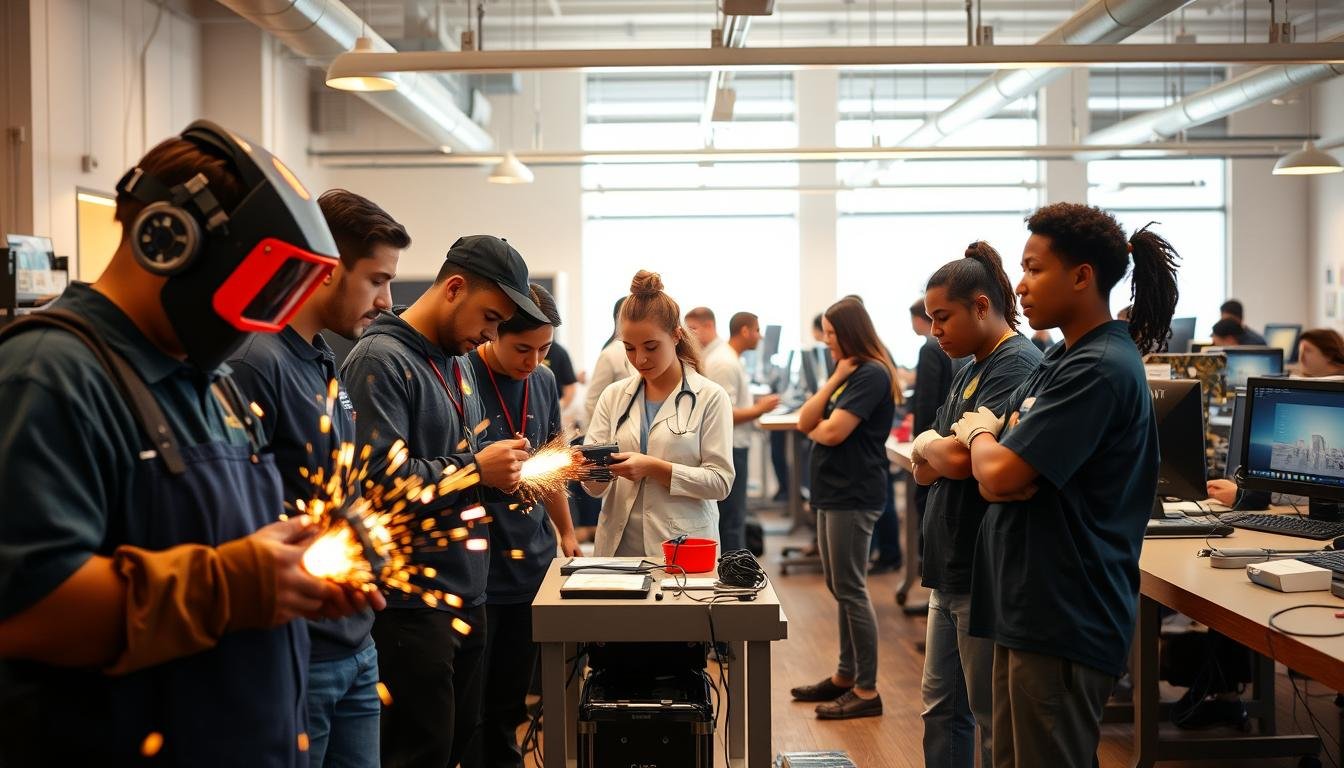
Top 10 High-Paying Careers Through Vocational Training
Did you know some vocational training jobs can pay as much as degree jobs in a few years? This changes how we see technical education in India. Hands-on training can lead to quick career growth and good pay.
We will show you ten high-paying jobs you can get through vocational training. These include electricians, plumbers, HVAC technicians, medical assistants, welders, automotive technicians, culinary professionals, cosmetologists, construction managers, and information technology specialists.
Vocational schools offer apprenticeships, community college diplomas, and short certificates. These paths let you start working fast and save on education costs. You can learn practical skills, build job security, and move toward higher roles.
We want to make technical education exciting and innovative. Vocational programs can lead to real-world success, stable careers, entrepreneurship, and opportunities for professional growth.
For more information on vocational programs in India, call us at +91 8927312727 or email info@nextstep.ac.
1. Electricians: Powering the Future
Electricians install, repair, and maintain electrical systems. Their work includes reading plans, laying wires, installing electrical components, and troubleshooting circuits.
Understanding the Role of Electricians
Electricians read blueprints and work with electrical components while ensuring that installations are safe and meet applicable requirements. They work in homes, commercial buildings, factories, and other environments.
Skills Required for Success
Electricians need knowledge of wiring, blueprint reading, electrical safety, and problem-solving. Good communication skills are also important when working with customers and other professionals.
Job Outlook and Salary Expectations
The job market for electricians is strong. The article notes that the average U.S. salary is around $60,240 a year, while experienced electricians in India can also build strong earning potential. Experience, certification, specialization, and entrepreneurship can improve career opportunities.
| Pathway | Typical Duration | Key Outcome | Where to Find |
|---|---|---|---|
| Apprenticeship | 4–5 years | Journeyman license, paid training | Union programs, contractor sponsorships |
| Trade School / Technical College | 6 months–2 years | Certificate or diploma, hands-on labs | Trade schools, polytechnics |
| On-the-Job / Military Experience | Varies | Practical skills, pathway to licensing | Industrial employers, Armed Forces training |
| Continuing Education | Short courses / workshops | Code updates, specialty skills | Vocational courses, industry centers |
2. Plumbers: Essential Lifelines in Construction
Plumbing keeps water, waste, gas, and heating systems operating safely in homes, offices, and factories. Plumbers read blueprints, install pipes and fixtures, solder joints, repair leaks, and respond to emergencies.
Daily Responsibilities of a Plumber
- Read blueprints and system plans.
- Install pipes and fixtures.
- Check systems for leaks and follow applicable codes.
- Talk to customers about repairs and maintenance.
Training and Certification Path
Many plumbers begin with an apprenticeship that combines classroom learning and practical work. In India, diplomas and ITI certificates can provide a route into the trade. Choosing a reputable trainer and understanding local requirements is important.
Average Earnings and Career Growth
The article cites an average U.S. earning level of around $60,090 for plumbers. Specialization in areas such as gas systems and HVAC piping can improve earning potential. With experience, plumbers can become master plumbers, contractors, or business owners.
3. HVAC Technicians: Keeping It Cool and Warm
HVAC technicians install, maintain, and repair systems that keep buildings comfortable and safe. HVAC systems also affect indoor air quality, energy use, and operating efficiency.
Importance of HVAC in Modern Living
Modern buildings depend on effective heating, ventilation, and air-conditioning systems. Industrial environments can require precise temperature control, making technicians with specialized skills particularly valuable.
Required Certifications and Skills
Training can range from short courses to longer apprenticeships. Programs may cover refrigeration, electrical work, controls, and metal work. Important skills include refrigerant knowledge, efficiency ratings, troubleshooting, and customer communication.
Income and Job Stability
HVAC workers can improve their income with experience and specialization. Knowledge of green technologies can create additional opportunities, and employers increasingly value real-world experience and certifications.
- Enroll in HVAC vocational training to build practical skills quickly.
- Choose programs that include hands-on labs and apprenticeships.
- Prioritize HVAC certification to stay market-ready.
4. Medical Assistants: A Vital Role in Healthcare
Medical assistants support healthcare professionals in hospitals, clinics, and other healthcare settings. They may help prepare patients, take vital signs, assist during examinations, and maintain records.
Duties and Daily Tasks
The exact responsibilities depend on the workplace. Medical assistants may perform practical tasks while also handling digital records and administrative responsibilities.
Training Pathways and Program Types
Students can begin with diploma or certificate programs, while other pathways may include associate-level education. Strong programs combine classroom learning with practical experience and recognized credentials.
Salary Insights and Career Development
Medical assistants can build their careers through experience and additional training. Opportunities may also extend into nursing and other healthcare roles. In India, students should look for programs that provide recognized training and practical work experience.
5. Welding Specialists: Joining Materials for Industry
Welding specialists work across construction, manufacturing, shipbuilding, energy, and infrastructure. Welding requires practical skill, precision, safety awareness, and the ability to read technical drawings.
Common welding methods include MIG, TIG, and stick welding. MIG is useful for efficient production work, TIG provides clean welds for specialized materials, and stick welding can be useful for outdoor and heavy-duty applications.
Training and Certification
Vocational courses, apprenticeships, and trade schools can combine classroom learning with hands-on experience. Certification can make skilled welders more competitive, particularly for specialized work in oil and gas, shipyards, and infrastructure.
With experience, welders can move into roles such as welding inspector, supervisor, or engineer. Some also start their own workshops or businesses.
| Program Type | Best For | Typical Outcome |
|---|---|---|
| Short vocational welding courses | Beginners seeking fast entry | Basic skills, entry-level jobs |
| Industry-linked apprenticeship | Hands-on learners | On-the-job experience, trade credentials |
| Advanced certification tracks | Specialists | Higher wages, niche roles |
6. Automotive Technicians: Diagnosing Problems
Automotive technicians diagnose and repair vehicles, from routine maintenance to complex mechanical and electronic problems. They use specialized tools and diagnostic equipment to identify faults and restore vehicles to reliable working condition.
Strong technicians combine practical skills with problem-solving and customer communication. Hands-on practice helps them understand vehicle systems and diagnose issues efficiently.
Training options range from short courses to full vocational programs. Manufacturer training and certification can improve employment opportunities and help technicians work with newer vehicle technologies, including electric vehicles.
7. Culinary Arts: Turning Passion into Profession
Culinary professionals can build careers in restaurants, hotels, catering, and food businesses. Career progression can begin with entry-level kitchen work and develop toward specialist or executive chef roles.
Culinary education covers knife skills, menu planning, flavors, food preparation, kitchen organization, and modern techniques such as sous-vide cooking. Vocational courses often combine classroom learning with practical kitchen experience.
Certification and hands-on experience can strengthen employability. When choosing a program, students should consider practical training, internships, and job-placement support.
8. Cosmetologists: Beauty and Wellness Experts
Cosmetologists combine technical skills and creativity to provide hair, skin, and beauty services. Training can include haircuts, styling, skincare, client communication, hygiene, and product knowledge.
Job Roles and Responsibilities
Daily work can include consulting with clients, planning treatments, providing services, maintaining records, and recommending products. Experienced professionals may manage salons or teach other learners.
Education and Licensing Requirements
Training normally combines classroom instruction with supervised practical work. Depending on the location and specialization, certification or licensing requirements may apply.
Earnings in the Beauty Industry
Earnings vary according to experience, specialization, location, and business ownership. Additional training can help professionals move into areas such as aesthetics or specialized beauty services.
9. Construction Managers: Leading Projects to Success
Construction managers connect skilled trades with project-level decisions. They plan schedules, monitor budgets, maintain safety standards, coordinate teams, review work, and help ensure projects are completed successfully.
Role of a Construction Manager
Construction managers coordinate trades such as carpentry and electrical work. They solve problems, review invoices, follow regulations, and turn project plans into practical work schedules.
Required Education and Experience
Many construction managers begin in skilled trades. Vocational training and apprenticeships provide practical experience, while diplomas and short courses can strengthen project-management skills.
Recommended Training Routes
- Take construction management courses covering contracts, cost control, and scheduling.
- Build career certifications in project management and safety.
- Gain site experience alongside vocational training.
Career Trajectory
A common progression can move from site supervision to management. Knowledge of BIM, estimating software, procurement, and contract processes can help professionals progress into higher-level roles.
10. Information Technology Specialists: Tech Innovators
Information Technology specialists can enter high-value technical careers through focused training and certifications. Roles include network technicians, systems administrators, cybersecurity analysts, cloud technicians, and help-desk professionals.
Varied Roles in IT Careers
Network and systems support keep technology environments running smoothly. Cybersecurity professionals protect data and systems, while cloud technicians manage services on platforms such as AWS. Help-desk technicians solve user problems and document solutions.
Essential Skills and Training Programs
Important skills include networking, operating systems, programming, troubleshooting, and communication. Vocational programs, vendor training, internships, and certifications can provide practical experience and help learners enter the technology workforce.
Salary Expectations and Industry Trends
Technology careers can offer strong earning potential, particularly in areas such as cybersecurity and cloud computing. The article highlights growing opportunities in India and recommends continuing to learn as technologies change.
Conclusion
Vocational education can provide a practical route into stable and rewarding careers. Electricians, plumbers, HVAC technicians, healthcare professionals, welders, automotive technicians, culinary professionals, cosmetologists, construction managers, and IT specialists all demonstrate how skills-based education can lead to professional growth.
The best pathway depends on your interests, training availability, practical experience, certification requirements, and local job opportunities. Choose programs that combine quality instruction with hands-on practice and recognized credentials.
For more information about vocational programs at NEXTSTEP, call +91 8927312727 or email info@nextstep.ac.