

We remember a day when engineering graduates talked about their futures. They wanted jobs at TCS and Amazon, or to work in PSUs. Some dreamed of starting their own businesses.
Engineering careers in India are diverse. You can work in IT, data science, or government. You can also go for higher studies or start your own business.
The engineering job market is changing fast. The U.S. Bureau of Labor Statistics says engineering jobs will be in demand until 2034. But, employers want specific skills and experience.
Companies like Infosys and Deloitte hire engineers. You can also find jobs on your own or through flexible learning paths.
This section is your guide to engineering careers. We’ll talk about different jobs and paths. You can contact +91 8927312727 or email info@nextstep.ac for more information.
Understanding Engineering Career Options
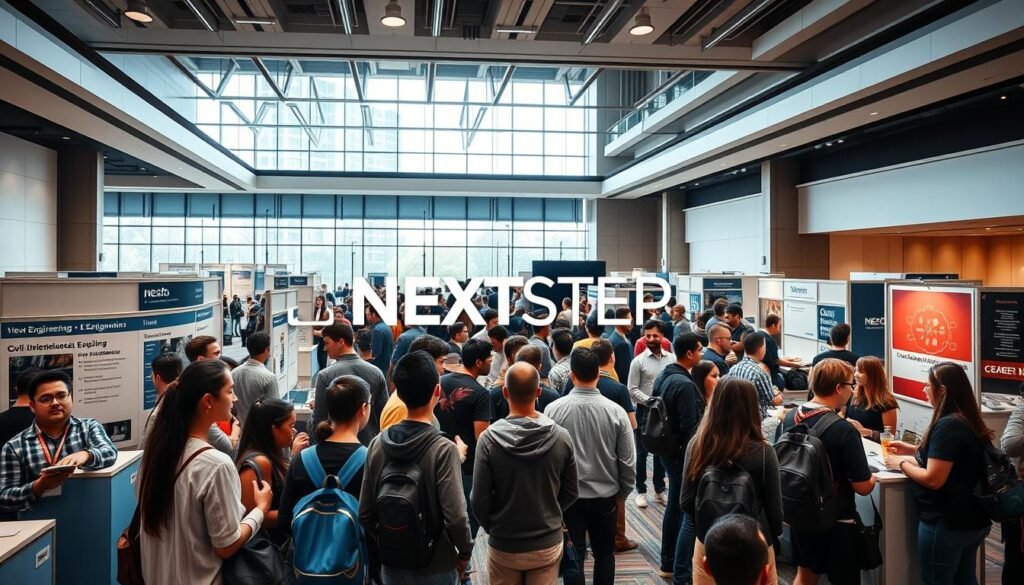
We start by showing you the big picture. This guide explains the main engineering fields. It talks about the importance of focusing your studies and the real-world factors that affect your career.
Overview of Engineering Disciplines
There are main branches like mechanical, civil, electrical, and electronics. Each branch has its own jobs. For example, mechanical engineers work on design and production.
Civil engineers focus on building and planning cities. Electrical and electronics engineers work on power and systems. Fields like computer science and AI also offer jobs in software and analytics.
Starting salaries vary. They can be between ₹2 LPA and ₹14.5 LPA. This depends on the field, company, and where you work.
Importance of Specialization
Getting specialized makes you better at your job. An M.Tech or MS can lead to senior roles. Certifications in AI, data science, and more also help.
There are programs for working people too. They can learn new skills without stopping work. Showing off your skills, like through projects or certifications, helps when you’re looking for a job or getting promoted.
Factors Influencing Career Choices
Choosing a career depends on your skills, interests, and job chances. Look at campus placement stats to see what’s in demand. Things like Make in India and renewable energy also play a part.
Think about what you want to do long-term. Do you want to research or manage? Entrance exams like GATE or UPSC can also affect your choices.
We suggest matching your skills with what’s needed in the job market. Try internships and real projects to see what you like. For non-CS majors, learning to code and work with data can open up more career paths.
Popular Engineering Fields After Graduation

We help graduates find the right engineering jobs. We show you the most popular fields, starting salaries, and where to find jobs. This info helps you pick the best fit for your skills and dreams.
Computer Engineering
Computer engineering graduates are in demand. They can become software engineers, full-stack developers, cloud engineers, or DevOps experts. Big companies like TCS, Infosys, and HCL often hire them.
They start with salaries from ₹5–15 LPA. But, top companies and cloud teams offer more.
Key skills include programming and cloud platforms. Even non-CS students can find jobs by learning full-stack development or data analytics.
Civil Engineering
Civil engineering graduates can be structural engineers, site engineers, urban planners, or construction managers. Companies like Larsen & Toubro and Tata Projects hire them for big projects. Salaries range from ₹1.8–18 LPA.
Internships in construction and surveying help them get jobs. The need for civil engineers grows with urbanization and public works.
Mechanical Engineering
Mechanical engineering graduates work in design, production, maintenance, and robotics. They find jobs in the auto and manufacturing sectors. Starting salaries are around ₹1.8–10 LPA.
Internships in shop floors and CAD projects make them stand out. Electric vehicles and factory automation offer great career prospects.
Electrical Engineering
Electrical and electronics engineers work in power, control systems, and VLSI design. They work for power utilities, electronics makers, and automation firms. Salaries range from ₹1.8–18 LPA.
Pairing circuit design with software tools or embedded systems opens more doors. This increases their chances in campus and off-campus hiring.
Emerging Trends in Engineering Careers
The engineering job market is changing fast. New roles and skills are needed. Young and old engineers must keep up with these changes.
Data Science and AI
Data science and AI are creating new jobs. Roles like Data Scientist and Machine Learning Engineer are in demand. Companies like Google and Flipkart need people for analytics and model building.
Start with hands-on training. Learn Python, statistics, and ML frameworks. Get certifications to stand out. NextStep Academy offers great programs.
Renewable Energy Engineering
Green energy and EVs are creating new jobs. Roles for renewable energy engineers and battery engineers are needed. Companies like Tata Power and Mahindra Electric are hiring.
Short diplomas and credentials in renewable systems help. Knowing engineering and data skills is key. This makes you ready for many jobs.
Cybersecurity
Cybersecurity and cloud jobs are very important. Roles like security analyst and cloud security engineer are needed. Companies like Wipro and Infosys are hiring.
Combine security skills with cloud and DevOps knowledge. This makes you very attractive. Electrical or computer engineers with cloud and security skills are in demand.
Job Opportunities in the Private Sector
We look at how engineers find good jobs outside of government. The private sector offers steady career paths and quick-growing startup chances. Students and new engineers can choose jobs that fit their skills, risk level, and salary hopes.
Many jobs come from campus and off-campus hiring. Big names like TCS, Infosys, and Amazon look for software developers, cloud engineers, and more. These jobs shape the IT and services world.
Starting salaries vary by job type. IT jobs usually start at ₹4–15 LPA. Jobs in manufacturing and core engineering start lower, at ₹1.8–8.5 LPA. Startups offer ₹4–7 LPA and chances to do many things.
Get ready for jobs by making your resume fit the job, practicing for interviews, and taking courses. Courses in data science and VLSI help for jobs in the private sector.
Internships and experience are key for jobs in consulting and manufacturing. Consulting wants problem-solving skills. Manufacturing needs hands-on knowledge of processes and tools.
Startups offer fast learning and a chance to be entrepreneurial. Engineers can move from building to managing products or operations. This opens up more career paths beyond coding and design.
To find jobs, check company websites, Naukri, LinkedIn, alumni networks, and college job boards. A good plan increases your chances of getting hired in the private sector.
Here’s a quick look at common jobs, who hires, and starting pay. This helps you focus your job search.
| Role Category | Common Employers | Typical Entry Salaries (₹ LPA) | Key Skills |
|---|---|---|---|
| Software & Cloud Engineering | TCS, Infosys, Wipro, Amazon, Zoho | 4–15 | Programming, cloud platforms, algorithms, system design |
| Product & Analytics | Freshworks, BYJU’S, Deloitte, startups | 4–12 | Data analysis, SQL, Python, product thinking |
| Engineering Consulting | Capgemini, Deloitte, specialist consultancies | 3–10 | Domain expertise, client communication, modeling |
| Manufacturing & Core Engineering | Large manufacturers, automotive firms, construction firms | 1.8–8.5 | CAD, materials, production planning, testing |
| Startups & Early-Stage Firms | Technology startups, product-focused SMEs | 4–7 | Versatility, rapid prototyping, cross-functional skills |
Government Job Opportunities for Engineers

We look at stable, well-paid jobs that shape many engineering careers in India. Public roles offer structured growth, strong benefits, and chances to work on big projects. Below, we outline practical steps and tips for engineers aiming for government roles.
Public Sector Undertakings are a big choice for graduates. Companies like BHEL, ONGC, NTPC, Indian Oil, SAIL, and Bharat Electronics hire through GATE or company exams. PSU jobs mix technical work with project leadership and offer long-term job security.
Some organizations also hire outside GATE. The Airport Authority of India, Reserve Bank of India, BARC, Shipping Corporation, NMDC, BSF, and HUDCO offer other entry ways.
Public Sector Undertakings (PSUs)
PSUs jobs reward technical skills and steady growth. GATE scores help get technical posts. Direct exams hire for managerial and specialist roles.
Pay includes basic salary, DA, HRA, and pensions or contributory benefits. We suggest starting GATE prep in the final year to aim for top firms.
Defense Services
Defense jobs offer unique career paths. Options include the University Entry Scheme (UES), AFCAT, Short Service Commission, and the Technical Graduate Course. Age limits vary by service, from 19 to 26 years.
Engineers in the Army, Navy, and Air Force work on systems engineering, avionics, weapons, and logistics.
Administrative paths like the UPSC Engineering Services Examination and Civil Services create hybrid careers. Preparing for these requires focused study on engineering basics and practice with standard UPSC formats.
Research and Development Organizations
Research labs like DRDO, ISRO, BARC, and CSIR institutes hire engineers for long-term technical work. Many R&D roles prefer M.Tech or PhD candidates, or those with strong project records. High GATE scores and advanced degrees ease entry and lead to specialist roles.
We recommend targeted steps: plan GATE and exam schedules, balance project work with publications if pursuing R&D, and choose electives that align with the lab’s focus areas. These actions increase competitiveness for top public research posts.
| Pathway | Typical Recruiters | Entry Route | Why Engineers Choose It |
|---|---|---|---|
| PSUs jobs | NTPC, ONGC, Indian Oil, BHEL, SAIL, Bharat Electronics | GATE score / company exams | Job security, structured career ladders, strong perks |
| Defense Services | Indian Army, Indian Navy, Indian Air Force | UES, AFCAT, SSC, TGC | Technical leadership, discipline, diverse engineering exposure |
| Research & Development | DRDO, ISRO, BARC, CSIR labs | M.Tech/PhD preference; GATE helps | Deep technical work, innovation, long-term projects |
| Administrative Engineering Roles | UPSC Engineering Services, Civil Services | IES/UPSC exams | Policy influence, large-scale infrastructure oversight |
Actionable tip: start focused GATE prep in the final year and map optional exams if aiming for UPSC or IES. Combine strong academics with internships, project experience, and targeted mock tests to boost chances across government jobs for engineers and broader engineering careers.
Entrepreneurship and Startups for Engineers

Engineering graduates start big companies like Flipkart, Ola, and Zomato. This shows how tech skills and creativity open new career paths in India.
Starting a business needs a clear problem and a simple first version. Break tasks into steps: check demand, make a basic version, test it, and keep improving. This saves money and makes the product better.
Skills like fixing problems and making quick prototypes are great for startups. Adding basic business knowledge helps a lot.
Colleges and cities have places for startups. They offer help, a place to work, and some money. Programs like Startup India help with workshops and grants.
Finding money can come from angels, venture capital, or the government. Choose the right money for your plan: angels for starting, VCs for growing.
Engineers do well in SaaS, EdTech, HealthTech, FinTech, and green energy. These areas need your knowledge and testing. Make things fast, check how they do, and improve based on what people say.
Getting management skills is good. An MBA or short courses can help. Also, getting advice from experienced founders is very helpful.
What to do next? Find a problem, make a simple solution, get help from an incubator, and look for money. Keep making things better and use numbers to guide your choices.
For help with starting a business, call +91 8927312727 or email info@nextstep.ac.
Advanced Education Options for Engineers

We look at ways to grow your skills and career after getting an engineering degree. You can choose from short courses to long research paths. Each path helps you reach different goals, like becoming an expert, working globally, or leading teams.
Here, we share common paths and details to help you pick what’s right for you.
Master’s Degrees
In India, M.Tech is a top choice for engineers wanting to specialize. You can focus on areas like Computer Science, AI, or Environmental engineering. You need a GATE score to get in. Many M.Tech students go into research or work in PSUs.
MS programs abroad offer a chance to work globally and get strong research skills. Places like the USA, Germany, Canada, and Australia are popular. You’ll need to pass GRE or national tests and English exams like TOEFL or IELTS. Scholarships and assistantships can help pay for your studies.
Specialized Certifications
Short-term certifications can boost your job chances quickly. Options include Data Science, AI/ML, and more. They last from three to twelve months.
Many are online, on platforms like Coursera and edX. Vendor certificates from Microsoft and Amazon are also available. These certifications improve your skills and make your resume stand out.
Doctoral Programs
PhD programs are for those aiming for academic careers or leading innovation labs. Funding often comes from research assistantships or university fellowships.
Getting a PhD means committing to original research for a long time. It opens doors to universities, national labs, and top corporate R&D groups. Here, your deep technical knowledge is valued.
Choose wisely based on your career goals. Go for M.Tech, MS, or PhD for deeper research and leadership. MBA is for those moving into management. Specialized certifications are for quick skill boosts.
| Option | Typical Duration | Key Entry Requirements | Best For |
|---|---|---|---|
| M.Tech | 2 years | GATE score, undergraduate degree | Technical specialization, PSU roles, research |
| MS (Abroad) | 1–2 years | GRE/GMAT, TOEFL/IELTS, transcripts | Global exposure, research assistantships, industry-research roles |
| Specialized Certifications | 3–12 months | Varies: course prerequisites or basic engineering background | Skill upgrades, immediate employability, cloud and AI roles |
| PhD / Doctoral Programs | 3–6 years | Master’s degree, research proposal, interviews | Academia, advanced R&D, research leadership |
| MBA (for engineers) | 1–2 years (full-time) or part-time/flexible | CAT/XAT/GRE, work experience for some programs | Management roles, operations, business analytics |
Importance of Internships and Co-op Programs

We think hands-on learning is key. Internships offer real-world tasks and tools. They help shape your career and boost confidence.
Gaining Practical Experience
Internships turn theory into action. Students work at big companies like Tata Consultancy Services. They apply what they learned and use real tools.
Networking Opportunities
Co-op programs help you meet people in the field. You can meet mentors and managers at career fairs. A good reference can get you a job.
Improving Employability
Internships make you better at your job. They show you have skills. Start applying early and keep your resume up to date.
Here’s what we do: use college placement services and job portals. Keep track of your progress. This helps you in the job market.
Skills that Enhance Engineering Career Prospects

We focus on the mix of skills that make an engineer stand out. Employers want strong technical skills and leadership abilities. A good mix opens up more career paths.
Technical Skills
Technical skills vary by field. For example, software engineers use Python and JavaScript. Devops engineers work with AWS and Azure.
Data scientists use Python, R, and TensorFlow. Mechanical and civil engineers need CAD/CAM and structural tools. Electronics engineers learn about embedded systems and power systems.
Certifications and project portfolios show what you can do. Employers look for real-world skills.
Soft Skills and Leadership
Soft skills are key for leadership. Skills like problem-solving and project management are important. PMP certification helps in management roles.
Leading in clubs or hackathons shows your skills. It makes your application stronger and opens more doors.
Communication and Teamwork
Good communication is essential. It turns technical work into real impact. We practice clear reporting and stakeholder updates.
Teamwork skills are also important. Employers look for candidates who can work well with others. Show your teamwork through projects and internships.
Balance technical skills with soft skills. Internships, project work, and certifications help. They make you a strong candidate for many careers.
Professional Associations and Networking
We think a strong network is key for career growth. Being part of respected groups adds credibility and learning chances. It also makes finding jobs easier.
Joining engineering groups has real benefits. Groups like IEEE, ASME, IETE, and the Institution of Engineers (India) offer many things. They help make your resume stronger and open doors to new roles.
Professional groups help with finding mentors and getting certified. Pick groups that fit your field. IEEE is good for electronics and computer, ASME for mechanical, IETE for telecom, and the Institution of Engineers (India) for civil and more.
Going to conferences helps you learn and see what’s new in jobs. Tech and energy events are great for meeting people and finding jobs. They can lead to internships and partnerships.
At networking events, it’s not just about cards. Prepare short project summaries and questions. Keep in touch online to turn contacts into job leads.
Online groups help solve problems and grow your portfolio. Use LinkedIn, Stack Overflow, GitHub, and research sites for feedback and jobs. Don’t forget about alumni networks and college job fairs.
By joining groups, going to events, and using online forums, you can find more career options. Make joining groups a regular thing. Go to important events and share your work online to stay visible and find new jobs.
The Role of Continuing Education
We think engineers should always keep learning. New tech comes fast, so they need to keep their skills sharp. This helps them move up and earn more.
Lifelong Learning in Engineering
Learning never stops for engineers. It’s a mix of degrees, short courses, and doing hands-on work. Part-time master’s and bootcamps help balance work and study.
There are special paths like AI and cloud computing. It’s smart to plan each step before starting. This way, you know where you’re going.
Online Courses and Workshops
Online courses are flexible and affordable. Places like Coursera and edX offer them. You can learn from home without stopping your job.
Workshops give you a chance to work on projects. We suggest combining these with real-world projects. This shows what you can do.
Industry Certifications
Certifications show your skills to employers. Examples include AWS and Microsoft certifications. They take a few months to a year to get.
They bridge the gap between school and work. They also pay off when you choose in-demand areas like cloud and AI.
We suggest a mix of certifications, degrees, and projects. This combo makes you more attractive to employers. It also helps you move into new areas.
| Option | Typical Duration | Best For | Representative Credentials |
|---|---|---|---|
| Part-time Master’s | 12–36 months | Deep specialization, academic progression | M.Tech, MS (part-time) |
| Short Bootcamps | 3–6 months | Rapid upskilling, portfolio building | Data science bootcamps, full-stack programs |
| Vendor Certifications | 1–6 months | Cloud, infra, vendor-specific roles | AWS Certified Solutions Architect, Azure Administrator |
| Security & Compliance | 2–6 months | Cybersecurity roles, risk management | CEH, CISSP prep courses |
| Project-based Courses | 1–4 months | Hands-on experience, demonstrable outcomes | Capstone projects, GitHub portfolios |
Conclusion: Finding Your Path in Engineering
Choosing a career path after graduation is not always easy. Many options exist, like core roles, IT jobs, data science, and more. Planning your engineering career is key. It involves knowing your strengths, matching your interests, and choosing a path that fits your goals.
Self-Assessment and Career Planning
Start by making a list of your technical and soft skills. Think about the industries you like. Then, plan to improve your skills with certifications or courses.
Get ready for job placements, internships, or exams like GATE. These steps can help you reach your career goals.
The Future of Engineering Careers
India’s job market is growing in green energy, electric vehicles, AI, and data science. These areas offer new career paths and higher salaries. Getting certifications or internships can quickly make you stand out.
Taking the First Step Towards Success
Begin by mapping your skills and picking a specific certification or course. Apply for internships or job placements. We’re here to help—call +91 8927312727 or email info@nextstep.ac for advice. Start your journey today and make your technical skills count.