

60% of top students use strict time-blocking. This shows that routines are key, not just talent.
We are a group of teachers, engineers, and students. We aim to change education with creativity and new ideas. This guide offers tips on managing time well for students in India.
We want to help students get better grades and feel less stressed. We use research to back our advice. It shows that top students avoid too much social media and plan their time well.
We explain things in a simple way. You’ll find easy-to-understand examples and steps to follow. If you need help or a workshop, call us at +91 8927312727 or email info@nextstep.ac.
Understanding Time Management in High School

We say time management is a skill, not a talent. It’s key in high school for study habits, mental health, and career prep. Having clear routines and simple systems helps avoid cramming and keeps stress down.
What is time management? It’s about planning and dividing time for classes, studying, activities, work, and rest. The aim is to use time well, not just to fill it. This way, students can focus on important tasks and have time to relax.
Why is it vital for high school students? Good time management boosts grades and lowers stress. It also prepares them for university and future careers. Teachers and top students often use calendars and time-blocking for classes and exams.
There are common challenges: dealing with deadlines, avoiding social media, and taking on too much. Students can overcome these by prioritizing tasks, setting study times, and taking breaks.
Time management in high school is about making choices. Choose what’s important, protect study time, and make sure to rest. Every small decision adds up to lasting habits.
Setting Clear Goals

We start by making big dreams into small steps. Clear goals help us manage our time better. We use notes and markers to see what’s important and keep moving forward.
Short-term goals are for daily and weekly tasks. These include homework, studying for tests, and exam prep. We count small wins to keep ourselves motivated.
Short-term vs. Long-term Goals
Long-term goals are for months or years ahead. These include doing well on exams and getting into college. We break these big goals into smaller steps.
To make big goals easier, we divide them into weekly tasks. We check our progress every two to four weeks. Using calendars and colors helps us see how we’re doing.
How to Set SMART Goals
SMART goals help us make plans we can follow. Each goal is Specific, Measurable, Achievable, Relevant, and Time-bound. This makes planning easier and helps us stay on track.
For example, aiming for a 90% in Chemistry is a SMART goal. We focus on one topic at a time. We track our progress and adjust our plan as needed.
Students who get good grades plan their week and study for each lecture. They spend 2–3 hours reviewing each lecture. This helps them stay focused and do well on exams.
Here’s a sample weekly plan to help you manage your time. Use it to plan your studies and stay on track.
| Goal Type | Weekly Action | Time Block | Milestone |
|---|---|---|---|
| Long-term: University Entrance | Cover one major topic per week; two practice tests | Mon–Fri: 2 hrs/topic; Sat: 3 hrs practice | Monthly mock exam score ≥75% |
| Semester: Board Exam Prep | Complete syllabus sections; past-paper practice | Daily: 1.5–3 hrs revision per subject | End-of-month subject test with improvement |
| Short-term: Assignment Deadlines | Draft, review, submit before deadline | Allocate 2–4 hourly sessions across week | Submission with tutor feedback before due date |
| Skill: Problem Solving Speed | Timed question sets; error analysis | Three 45-min drills weekly | Reduce average time per question by 20% |
Prioritization Techniques for Students

We start with ways to pick what’s most important in a busy school week. Good prioritization helps us focus on work that improves grades. It also reduces stress and gives us time for projects and clubs.
The Eisenhower Matrix
The Eisenhower Matrix sorts tasks into four boxes. It helps us decide what to do first. Tasks are urgent and important, important but not urgent, urgent but not important, or neither.
For students, it’s easy to see how it works. Urgent and important tasks are like an upcoming exam. Important but not urgent tasks are long-term projects. Urgent but not important tasks are interruptions, like friends asking for help.
Tasks that are neither urgent nor important are things like watching too much TV. We use the matrix to decide what to do first. It helps us manage our time better.
ABCD Prioritization Method
The ABCD method labels tasks with letters. A means must-do, high impact; B means should-do, medium impact; C means nice-to-do, low impact; D means delegate or drop. Jason Khoo says to focus on tasks that affect your grade.
Students can list tasks and label them A–D. Then, they can plan their study blocks. This method helps us focus on what really matters.
Combining Methods for Weekly Planning
We suggest using both the Eisenhower Matrix and the ABCD system. The matrix helps with daily tasks, and ABCD helps with weekly planning. This way, we can plan our week better.
For example, mark important tasks like a physics test as A. Schedule focused blocks for them. Treat less important tasks as C or D and say no when needed.
Behavioral Tips to Protect Priority Time
Saying no to things that don’t matter is important. Joshua Eickmeier and Jessie say to avoid TV and gaming during exams. Straight-A students use apps to block distractions.
Use these tips to stay focused: tell family and friends about your study times. Turn off notifications and have a simple ritual to start studying. These habits help us prioritize and manage our time better.
Creating an Effective Daily Schedule
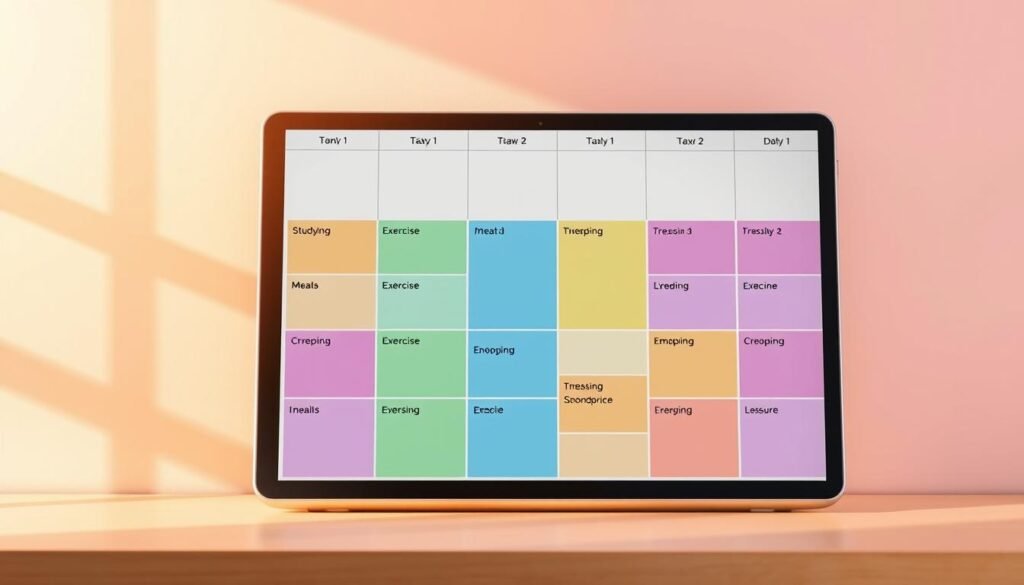
We help students make a time plan that works for school life. A good daily schedule helps turn plans into habits. Making small changes helps stay focused and less stressed.
Begin by reviewing your week at the start. Write down classes, labs, exams, clubs, and sports. Use a calendar to block out time for each activity. This makes it clear what to do first.
Time Blocking Method
Time blocking means setting aside blocks for work, classes, breaks, and fun activities. We plan study time after classes. This helps you learn more.
Use different colors on your calendar for different activities. This makes planning easier and helps when things change.
Leave some space between blocks for travel, unexpected tasks, and breaks. This keeps your day from getting too full.
The Importance of Routine
Routines save energy. When you study at the same time every day, you don’t waste time deciding when to work. Study when you’re most alert.
Don’t try to do too much at once. Take breaks and have a big buffer day each week. This helps avoid burnout.
Use this checklist to make a daily plan. Check it weekly and change it if needed. Doing this regularly makes planning easy.
| Step | Action | Example |
|---|---|---|
| 1. Weekly audit | List fixed commitments and deadlines | Classes, lab hours, exam dates |
| 2. Block creation | Assign contiguous blocks for tasks | 2-hour deep study block after a 1-hour lecture |
| 3. Color coding | Use colors for quick recognition | Blue: academics, Green: sports, Yellow: social |
| 4. Buffer time | Include short and weekly buffers | 15-minute breaks; 2-hour weekly catch-up |
| 5. Routine alignment | Match blocks to peak focus times | Morning study for early birds; evening for night owls |
| 6. Review | Adjust schedule based on outcomes | Weekly review on Sunday evening |
Overcoming Procrastination

We all face procrastination every day. It’s easy to get sidetracked. We want to help you stay on track with simple steps.
First, find out what makes you delay. Is it social media or unclear tasks? Knowing helps us find better ways to stay focused.
Identifying Procrastination Triggers
Make a list of when you put off studying. Is it social media or unclear tasks? Find and fix these problems quickly.
- Social media pings: mute or schedule checks.
- Unclear task boundaries: define exact steps and time limits.
- Low-value activities: replace with structured breaks.
- Fatigue: rest or shift heavier tasks to peak hours.
Strategies to Stay Motivated
Use tools and habits to stay on track. Apps like SelfControl block distractions. Start with the hardest task early.
Break tasks into small parts and set study times. Seeing your progress can motivate you. Use colors and ticks to show your effort.
- Pomodoro timers: 25 minutes focused, 5 minutes break.
- Schedule rewards after focused blocks: a short walk or a cup of tea.
- Reserve social media time only after work is done, following advice from Victoria Shockley and Caitlin Hale.
- Label trade-offs as effective compromises, a psychological reframe credited to Joshua Eickmeier.
We have practical tools to help you manage time better. Each one helps you avoid procrastination and stay focused.
| Tool or Tactic | Main Benefit | How to Use in Higher Secondary |
|---|---|---|
| SelfControl / StayFocusd | Blocks distracting sites and apps | Activate during study windows and exams to limit interruptions |
| Eat the Frog | Reduces dread by tackling hardest task first | Schedule the toughest subject in your morning peak hour |
| Pomodoro Timer | Boosts sustained focus with regular breaks | Use 25/5 cycles for homework and 50/10 for longer study sessions |
| Weekly Plan + Progress Markers | Visual motivation and clear milestones | Color code subjects and tick completed tasks at week’s end |
Balancing Academics and Extracurriculars

Students face many demands like classes, sports, and clubs. Good time management helps balance these. Making small choices can protect study time while keeping activities rich.
First, count how many hours you have each week. Set times for classes and travel. Study when you’re most awake, like mornings for tough topics.
Make rehearsals and meetings fixed times. This way, you can plan your studies around them.
Importance of Time Allocation
Write down how many hours you spend on each activity. Use a calendar to see your schedule. This helps you avoid too much and keep some free time for rest.
How to Plan for Clubs and Activities
Focus on important school tasks first. Use different colors for classes, study, and clubs. Make sure to leave space for new things.
Think carefully before taking on more. Check if you have enough time. Saying yes to too much can hurt your grades and health.
Plan ahead for exam weeks. Cut back on less important activities. Use apps to help you stay focused during study sessions.
Check your plan every week and make changes if needed. Small adjustments can keep you on track. This is what good time management looks like.
The Role of Tools and Technology
We use tech to help us manage our time better. Students can use digital tools and simple habits to keep their study time safe. The right apps and calendars help make these habits a part of their daily life.
Recommended apps for time management
There are apps that students all over the world use. SelfControl for macOS, StayFocusd as a Chrome extension, and mobile apps like Forest or Focus@Will help them stay off social media. Todoist and Microsoft To Do are great for planning tasks. Pomodoro timers like Focus Booster or TomatoTimer keep them focused.
Utilizing calendar tools effectively
Google Calendar and Outlook Calendar are good to use together. They help you keep track of classes, study times, and deadlines. Use different colors for different activities. Set reminders for when things are due and turn off notifications when you need to focus.
Keep track of how many hours you study each week. This helps make sure you’re studying enough. For those who like to see things on paper, a planner or wall calendar can be helpful. University trackers can also help you see how much work you have.
Integration and best practices
- Sync your mobile and desktop calendars so you always have the latest info.
- Only let certain people invite events during exam weeks.
- Set your notifications so only important ones get through during study time.
- Use a task manager with a Pomodoro timer to make your tasks shorter and more focused.
Try out a new app every term and see how it helps. When you find the right tools, managing your time becomes easier and less stressful for students.
Study Techniques that Save Time

We focus on simple steps to learn more and waste less time. Students with exams and projects need easy time management tips.
Start with active learning: try retrieval practice, spaced repetition, and practice problems. Peer teaching and short summarization are also good. These methods are better than just rereading.
Active Learning Strategies
Use retrieval practice at the start and end of each session. Ask yourself quick questions without notes. Add spaced repetition: revisit core topics at increasing intervals to lock concepts into long-term memory.
Prioritize high-impact topics by grade weight and deadlines. Jason Khoo’s approach to efficient planning teaches us to place heavier-weight topics in earlier study slots. Focus where scores will rise most.
After reading a page or solving a problem, teach the idea to a peer or explain it aloud. This clarifies gaps fast. Keep sessions short so attention stays high; switch tasks when comprehension drops.
The Pomodoro Technique
Use the Pomodoro Technique for structured focus: pick a task, work for 25–50 minutes, then take a 5–10 minute break. Regular breaks reduce fatigue and sustain concentration over long study blocks.
Combine Pomodoro with active learning: at the end of each interval, do a quick self-test or a practice question. That immediate recall cements learning and makes study time far more productive.
Prepare materials before a Pomodoro block. Remove distractions by blocking social apps and setting phone to do-not-disturb. Schedule Pomodoro blocks in your calendar so study becomes a visible commitment.
| Technique | Session Length | Primary Benefit | How to Use |
|---|---|---|---|
| Retrieval Practice | 5–10 minutes per topic | Improves recall | Quiz yourself without notes after reading |
| Spaced Repetition | Short daily reviews | Long-term retention | Use flashcards or spaced schedule for core facts |
| Practice Problems | 20–40 minutes | Applies concepts | Focus on high-weight exam questions |
| Peer Teaching | 10–30 minutes | Deep understanding | Explain topics to classmates in study groups |
| Pomodoro Technique | 25–50 minute intervals | Sustains focus, reduces fatigue | Work focused intervals, then short breaks; test after each |
Stress Management and Time Management

We have tight deadlines and lots to do. Poor planning can make us tired and stressed. We need to plan well and take care of ourselves.
Spotting stress early is key. Look for tiredness, trouble starting tasks, and short temper. These signs mean we need to plan better.
Recognizing Stress Signals
Short check-ins help us catch stress early. Ask about sleep, note procrastination, and watch mood swings. These signs tell us to adjust our plans.
Techniques to Manage Student Stress
There are simple ways to avoid stress. Break tasks into smaller parts and take short breaks. Make sure to have some downtime each week.
Getting enough sleep is important. Try to go to bed at the same time every night. Also, do some physical activity to stay focused.
Use tools to block distractions when you need to focus. If you have too much to do, cut back or ask for help. For tips on planning and sleep during exams, check out this guide: how to manage stress during exams.
| Issue | Practical Fix | Benefit |
|---|---|---|
| Persistent fatigue | Set fixed sleep schedule and single-night recovery limits | Improved concentration and memory |
| Procrastination spikes | Use short, timed study sessions with breaks (25–50 minutes) | Higher task initiation and steady progress |
| Irritability and mood drop | Add movement breaks and social downtime in weekly plan | Better mood regulation and resilience |
| Declining grades | Review priorities, cut nonessential commitments, seek tutor help | Focused study time and targeted improvement |
| Avoidance behaviours | Build buffer time and split tasks into micro-tasks | Reduced overwhelm and clearer progress |
Here are some tips for managing time in higher secondary: plan ahead, break tasks into smaller parts, and take care of your sleep. Regularly check and adjust your plans to stay on top of things.
Learning to Say No
We have to manage classes, projects, and campus life in just 24 hours. Saying no helps us focus on important tasks. It keeps us from getting too busy and helps us save energy for what really matters.
Setting Boundaries
We check each new request against our schedule and goals. If it doesn’t fit, we say no nicely. This keeps our relationships good while setting healthy limits.
Setting boundaries means checking your calendar and comparing requests to your goals. You can say no firmly but kindly. Use shared calendars and app blockers to stay focused.
Communicating with Peers and Teachers
We explain our limits clearly and suggest solutions. For example, we might go to one meeting a month instead of every week. This way, saying no feels like working together.
When we can’t meet deadlines, we talk about it early. We explain the problem, say what’s more important, and ask for a little more time. This keeps trust and shows setting boundaries helps everyone.
We show our busy times on Google Calendar and use focus modes on phones. These tools help others respect our time. They also help us manage our time better.
Reflecting and Adjusting Your Time Management
Start with a quick weekly check: see what you planned versus what you did. This habit helps you find where you get stuck and where you spend your time. It shows where you might be doing too much.
Use simple ways to make choices. Track study hours for each subject. Aim for two to three hours of self-study for every lecture hour. If a subject is lagging, move your focus to where you can learn more.
Try different ways to organize your time. See if Pomodoro cycles, time-blocking, or the Eisenhower grid work for you. Find what fits your natural rhythms and schedule.
Make small changes to see what works. Adjust your study times, block sizes, or breaks until you find what works best for you.
Keep your plans realistic. Cut back on activities during busy weeks. Remove distracting apps or move them out of sight. Use colors on your calendar to see your priorities quickly.
Here’s a simple checklist for weekly reviews:
- List what you did versus what you planned with time spent.
- Mark subjects needing more study time and plan to spend more on them.
- Track distractions and plan to reduce them next week.
- Make one small change to improve your schedule.
Think of scheduling as a continuous process. Small changes add up over time. For tips on Pomodoro and time-blocking, check out a student guide.
Regularly review and adjust your time management. This builds a system that grows with you. Reflecting on your time management helps you make steady progress and control your study outcomes.
Seeking Help and Resources
Higher Secondary Time Management needs more than just willpower. It requires the right tools and help. If studying feels like a never-ending cycle with little progress, it’s time to ask for help.
Early action helps keep things on track. It keeps gaps small and keeps momentum going.
When to Ask for Help
Ask for help when grades don’t improve, even with hard work. If stress and burnout stop you from studying, it’s time to seek help. Missing deadlines or not knowing how grades are counted also means it’s time to ask.
Teachers and counselors can help. Talk to subject teachers for help with homework and deadlines. School counselors can help with stress. Ask senior students for study tips. And parents can help with scheduling.
Using School Resources Effectively
Use school resources to your advantage. Visit academic support centres and join study groups. Download tools like Google Calendar and Pomodoro timers to stay focused.
For more help, consider workshops or coaching. These can improve your time management skills. For workshops in India, call +91 8927312727 or email info@nextstep.ac. We offer practical training to help you manage your time better.