

We remember a classroom in Pune. A small group built a mobile app in six weeks. They got jobs at a local startup right away.
This shows employers want people who can start working right away. Today, vocational training is creating similar success stories in India. From Chennai’s manufacturing floors to Bengaluru’s digital teams.
We will look at vocational education and trade school careers that are in demand. We’ll use market data, course outcomes, and employer needs. This will show which paths lead to quick and lasting work.
Sectors like healthcare, IT, manufacturing, hospitality, automotive, beauty, wellness, and green energy are hiring. They want vocational graduates.
Salaries show the opportunities: Digital Marketer (₹0.3–9.4 LPA; avg ₹3.0 LPA), Web Developer (₹1.0–7.0 LPA; avg ₹2.8 LPA), Data Analyst (₹1.6–11.7 LPA; avg ₹4.1 LPA), Mobile App Developer (₹1.6–12.1 LPA; avg ₹4.4 LPA). Roles like Graphic Designer to Beautician also have strong entry-level opportunities.
Big companies like Tata Motors, Infosys, Wipro, Mahindra & Mahindra, and Britannia Industries are looking for talent. They want people for operations, technical maintenance, digital roles, and manufacturing. For more information, contact Next Step: +91 8927312727, info@nextstep.ac.
Understanding Vocational Training and Its Benefits

Vocational training is a hands-on way to learn for work. It mixes classroom learning, lab practice, and real-world experience. This path leads to jobs quickly.
What is Vocational Training?
Vocational training teaches job-specific skills. It covers many areas like tech, healthcare, and beauty. Students learn by doing in labs and get work experience.
It’s shorter and cheaper than college. Courses keep up with industry needs. Some need tests like NIFT or UPCET.
Key Benefits of Vocational Skills
It teaches you to use tools and systems well. You’re ready for real work from the start.
It makes you job-ready because it matches what employers want. This means you get hired faster.
It’s quick and affordable. You can do it part-time or online. This fits with work or family.
Getting certified shows you’re good at your job. This helps you find better jobs and grow your career.
Popular Fields of Vocational Training
Fields like digital marketing and web development are popular. Creative tech areas include graphic design and photography.
Traditional trades like electrical work and car repair are also in demand. Hospitality and beauty are other options.
Who can apply varies. Some need Class 10 or 12, others certificates. Skills like teamwork are important too.
| Program Component | What It Delivers | Outcome |
|---|---|---|
| Classroom Instruction | Theory, safety norms, industry standards | Conceptual foundation for tasks |
| Workshops & Labs | Hands-on practice with tools and equipment | Operational competence for vocational training jobs |
| Industry Placements | On-site experience, mentoring by professionals | Faster hiring into vocational skills jobs |
| Flexible Delivery | Part-time, online, hybrid options | Access for working learners and caregivers |
| Certification | Industry-recognized credentials | Improved access to vocational education careers |
| Entrance Requirements | Class 10/12 or prior certificates; some exams | Determines program level and duration |
High-Demand Jobs After Vocational Training

We find the best ways to go from learning by doing to getting a job. Vocational training leads to jobs in technical trades, health, and digital fields. These areas are growing fast because they need people with practical skills.
Technical and Trade Careers
Jobs in construction, manufacturing, and cars are in high demand. Electricians, HVAC techs, welders, machinists, and car techs are needed a lot. Now, there’s a big need for EV and hybrid car experts too.
Building new things and going green create jobs for installers and maintenance workers. Many trades offer good pay, around ₹2.5–3.5 LPA. Getting certified can help you earn more.
It’s smart to have a portfolio and get certified. For more on engineering trades, check out industry-focused training.
Healthcare Vocational Roles
Healthcare jobs include paramedics, lab techs, nursing aides, and hospital staff. More hospitals and older people mean more jobs in health care.
You can start with diplomas, short courses, or internships. Getting trained helps you get hired and keeps you stable. Health care techs can earn around ₹5.5 LPA, based on what they do and where they are.
Digital and IT Job Opportunities
The need for digital skills is growing fast. Jobs include web and mobile developers, data analysts, and cyber security experts. These jobs are in demand.
Employers want to know Java, Python, JavaScript, and data tools like Tableau and Power BI. Cyber security certifications are also important. Jobs in data science and AI pay well, up to ₹25 LPA. Many digital jobs start with lower pay but can grow quickly.
Building a GitHub portfolio and project logs can help you get hired. Short courses with real projects can lead to paid jobs faster.
| Job Category | Sample Roles | Typical Starting Pay (₹ LPA) | Primary Growth Drivers |
|---|---|---|---|
| Technical & Trade | Electrician, HVAC technician, Welder, Machinist, Automotive (EV) | 2.5–3.5 | Infrastructure, green energy, EV adoption |
| Healthcare Vocational | Paramedical tech, DMLT, Nursing aide, Lab technologist | 3–6 (avg ~5.5) | Hospital expansion, aging population, diagnostics |
| Digital & IT | Web dev, Mobile dev, Data analyst, Cyber security tech | 3–25 (role-dependent) | Digital transformation, analytics, cybersecurity needs |
Top Vocational Training Programs in India

We help you find the best ways to start vocational education careers. Short courses and diplomas offer quick skills for the job market. Picking the right program is key to your career in trade school and vocational training jobs.
Overview of Popular Programs
Popular choices mix tech with hands-on skills: digital marketing, web development, and more. Traditional trades like electrical and auto engineering are also popular.
Healthcare and service fields include beauty and hospitality. New areas like robotics and business analytics are also in demand.
When choosing programs, look at lab time and trainer experience. Programs with job placement help you start your career faster.
Duration and Cost of Programs
Course lengths vary from weeks to two years. Certificates are shorter, while diplomas take longer. Short programs let you start earning quickly.
Prices differ based on the school and program. Vocational programs are often cheaper and quicker to start earning than university degrees.
Certification and Accreditation Importance
Certifications show you’re skilled. Look for diplomas and certificates from known boards. For tech jobs, certifications like CEH and CISSP are important.
Accreditation by schools like SAGE University Bhopal is key. Good schools have strong job networks. Look at curriculum, hands-on time, and trainer experience before choosing.
Some schools use entrance tests. Check the program’s relevance, hands-on time, and job support before you start.
Skills Employers Look for in Vocational Graduates

We focus on the skills hiring managers want in vocational hires. They look for both technical skills and soft skills. This mix helps new hires fit in quickly and find jobs in many fields.
Technical skills are key for skilled trade jobs. For IT jobs, they want to know Python, Java, and JavaScript. They also look for knowledge of web frameworks and data tools like Excel and Tableau.
For trades, they want skills in fixing hardware, diagnosing cars, and working with HVAC systems. They also look for lab skills in DMLT programs.
Soft skills are important for long-term success. Employers want clear communication, teamwork, and time management. They also value customer service and safety skills in hospitality, beauty, healthcare, and workshops.
Problem-solving skills can make a big difference. They help graduates stand out when they have similar skills.
Vocational programs should teach soft skills too. Role plays, client interactions, and safety drills help build confidence. Employers like graduates who can solve real problems and work safely.
Certifications show a graduate’s skills and speed up hiring. For security jobs, CEH or CISSP is important. For paramedical jobs, accredited diplomas are needed. IT and design jobs value Adobe, Google, and Microsoft certifications.
Portfolios and internships show a candidate’s skills. Recruiters like to see documented projects and internship records. This makes it easier to find a job in skilled trades.
Learning new things is important. Micro-credentials, MOOCs, and short courses in AI/ML, cybersecurity, and data analytics are good. They show a candidate is ready to grow and adapt.
The checklist below helps programs and candidates meet employer needs.
| Priority Area | Concrete Examples | Employer Benefit |
|---|---|---|
| Core Technical Skills | Python, Java, JavaScript, HVAC servicing, automotive diagnostics, DMLT lab methods | Immediate productivity; reduced supervision |
| Data & Tools | Excel, Power BI, Tableau, basic ML toolkits | Better decision-making; measurable results |
| Soft Skills | Communication, teamwork, time management, customer service, safety compliance | Higher retention; improved client satisfaction |
| Certifications | CEH/CISSP, accredited paramedical diplomas, Adobe/Google/Microsoft certificates | Credentialed trust; access to advanced roles |
| Practical Experience | Internships, project portfolios, references from institutes | Proof of applied skills; faster hiring |
| Continuous Upskilling | Micro-credentials, MOOCs in AI/ML, cybersecurity, data analytics | Future-proof skills; adaptable workforce |
Regional Insights: Job Opportunities by State

We help you find the best vocational path by looking at job demand across states. Different areas have different needs. Cities need tech and healthcare workers. Rural areas need tradespeople to support local businesses.
Job Markets in Major Indian States
Maharashtra, Karnataka, Tamil Nadu, Gujarat, and Delhi-NCR are big for tech and manufacturing. Infosys, Wipro, Tata Motors, and Mahindra hire tech and IT support workers. These places offer many jobs in manufacturing, cars, and health tech.
Kerala, Goa, Rajasthan, and Uttarakhand are growing in hospitality and tourism. Hotels and travel groups need staff for the front desk, kitchen, and guest services. These areas offer more jobs in the service sector.
Tier-2 and Tier-3 states are growing in manufacturing, green energy, and health care. They need paramedics, solar installers, and tech equipment workers. Local plants and clinics often prefer candidates with hands-on skills.
Urban vs. Rural Employment Trends
Urban areas have more jobs in digital, IT, design, and advanced health care. It’s easier to find internships and jobs in cities. We suggest looking for schools with good connections to employers in cities.
Rural and semi-urban areas need electricians, car mechanics, farm equipment techs, and phone fixers. These jobs help local economies and let you start your own business. Jobs in these trades often mean you can earn money quickly.
There are two paths: move to a city for special jobs or stay local and start a business. We suggest choosing training that matches local job needs. This can help you find a job and grow your career.
The Role of Internships in Vocational Training

We see internships as a link between learning in class and real jobs. Short internships help trainees try out their skills and meet employers. They make learning feel real and useful.
Benefits of Real-World Experience
Internships let students use what they learned in class to solve real problems. This makes them better and faster at their jobs.
They also learn important skills like talking clearly, working with others, and being disciplined. These skills help them make a good name for themselves in their careers.
Many times, internships turn into full-time jobs. Having projects and portfolios shows employers you can do the job. This makes finding a job easier.
How to Find Internship Opportunities
Look for internship opportunities through your school’s placement office and alumni network. Choose programs that have a good track record of placing students in jobs.
Use online sites like LinkedIn, Internshala, and Naukri, and check company websites for job openings. Local businesses like hotels, clinics, and repair shops often hire interns for hands-on work.
Make a short resume and a portfolio with your work. For help finding internships, call Next Step at +91 8927312727 or email info@nextstep.ac.
Set goals for what you want to learn, ask for a mentor, and document your work. This way, your internship could lead to a job or a great start in your career.
Networking and Job Search Strategies
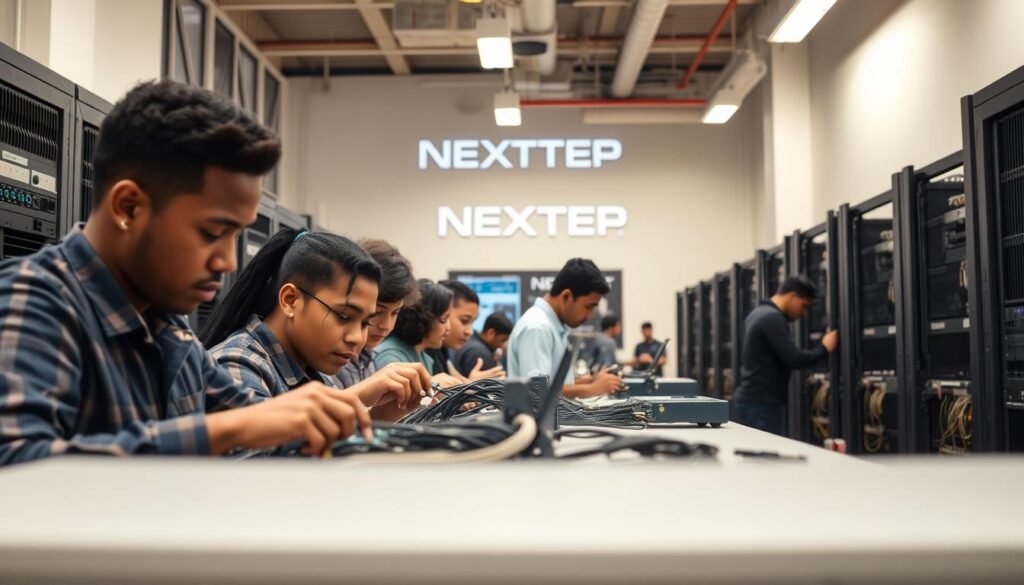
We help vocational graduates find jobs. We teach them to use the internet and make friends in their field. This way, they can get vocational training jobs or skilled trade jobs.
Utilizing Social Media for Job Searches
Start with LinkedIn. Make your headline clear, list your skills, and add photos of your work. Follow big companies to find job openings.
For developers, use GitHub. Designers should post on Behance or Dribbble. If you’re in photography, cosmetology, or video, use Instagram and YouTube. These sites help you apply for jobs.
Also, check job sites like Internshala, Naukri, and indeed. Look at company websites and send messages to recruiters. Tell them why you’re a good fit and share your portfolio.
Building Professional Connections
Go to job fairs and workshops. Meet people who hire. Local groups and apprenticeships help you find jobs.
Use your school’s job help and talk to alumni. Ask for advice and referrals. Keep your messages short and to the point.
Once you get a job, stay in touch. Share your work and thank those who helped you. Referrals can lead to more jobs and career growth.
- Make your resume match the job you want. Show your achievements.
- Make a short video or case study. It should show your skills.
- Think about starting your own business. It could be a salon, repair shop, or design studio.
Success Stories: Vocational Training Graduates

We share real stories of career paths that started with vocational training. These stories show how it leads to stable jobs and growing businesses. They highlight the importance of focused training, practical skills, and knowing the local market.
We look at progress in four areas: web development, paramedical diagnostics, HVAC services, and beauty & wellness. These examples show how vocational training can lead to better pay and starting new businesses. It happens when you mix skills with real-world experience.
Inspiring Case Studies from Diverse Fields
A web developer started with a three-month course. They built a portfolio on GitHub and did two internships in Bangalore. This led to a job at a mid-sized firm, with higher pay and quicker hiring.
A DMLT graduate became a junior technician at a lab. After two years, they moved up to senior technician. They then got more training in molecular diagnostics. This opened doors to supervisory roles and higher pay in hospitals.
An HVAC technician learned about refrigeration and air-conditioning. They then focused on solar-ready retrofits. This led to more work, municipal contracts, and starting a business. Training and local demand helped them grow fast.
A beauty & wellness graduate got salon certification and learned social media marketing. This grew their freelance work into a profitable business. They expanded by adding bridal packages and workshops, then opened a studio in a busy area.
Lessons Learned from Their Experiences
Hands-on portfolios, verified certifications, and internships help get hired faster and earn more. IT and healthcare recruiters value practical work as much as degrees.
Staying up-to-date with new skills leads to better jobs. This includes data analytics for developers, advanced lab training for paramedics, green-energy certifications for HVAC, and digital marketing for beauty specialists. This way, vocational training can lead to senior roles.
Networking and knowing the local market well creates steady demand. Graduates found work in clinics, small hotels, and retail. This approach helped them find work in both cities and towns.
We offer a quick comparison to help choose between trade school and vocational education.
| Field | Typical Starting Role | Key Credential | Measured Outcome (2–4 yrs) |
|---|---|---|---|
| Web Development | Junior Front-end Developer | Short course + GitHub portfolio | Full-time placement in Bangalore firm; 20–40% salary rise after internships |
| Paramedical (DMLT) | Junior Lab Technician | DMLT diploma + specialized modules | Promotion to senior technician; path to supervisory roles in regional labs |
| HVAC & Refrigeration | Field Service Technician | Trade certification + green-energy training | Business formation; contracts for retrofit projects; expanded service area |
| Beauty & Wellness | Salon Specialist / Freelancer | Salon diploma + digital marketing | Freelance client base → own studio; diversified revenue streams |
One big lesson from these stories is clear: vocational training can lead to good jobs and starting your own business. If you’re thinking about vocational training, follow these steps to succeed in your career.
The Future of Vocational Training in India
Vocational education will play a big role in India’s job market. As jobs change with new tech, new jobs will pop up. This means more chances in fields like green energy and health care.
Emerging Trends and Industries
AI, cybersecurity, and data science are creating new job needs. These jobs need quick, focused training. Jobs in green energy and car tech are growing too.
Hospitality and beauty fields will keep growing. Health care will need more people to help doctors. This will create more jobs in health care.
Analyzing the Impact of Technology
Technology is making tech jobs more complex. Now, tech workers need to know about digital stuff and AI. They also need to understand how to fix complex systems.
Learning will change with new tech. People can learn a little at a time. This lets them keep up with new job needs.
We need to work with industries more. We should make sure training is good and helps people get jobs. For help finding a job, call Next Step at +91 8927312727 or email info@nextstep.ac. We make learning fun and help you find your dream job.