

A group of students opened the HSC All Guide Book 2025 app one afternoon. They found a clear plan for the term ahead. They had Physics diagrams, chapter-wise MCQs, and a checklist for practicals all in one place.
This simple moment changed how they prepared for exams. Their scattered notes became a clear guide.
We want to bring that clarity to every learner. This Higher Secondary Study Guide gathers trusted study material. It comes from places like Jagran Josh and CBSE updates.
We shape these resources into a practical roadmap. Our goal is to make education better through creative, useful tools. We offer syllabus-aligned notes, exam patterns, and digital tools for learning and test prep.
For support or to partner with us, call NextStep: +91 8927312727, or email info@nextstep.ac.
Introduction to Higher Secondary Education

We start by explaining why the higher secondary years are so important. These two years are key: they lay the foundation for learning, help with university choices, and guide career paths. A good Higher Secondary Study Guide helps everyone make these choices with confidence.
Importance of Higher Secondary Education
Senior secondary study is very important. Board exams and entrance tests require a good understanding of the syllabus and exam pattern. We teach how to plan well to reduce stress and improve scores.
Learning in a structured way helps avoid needing outside help. The HSC All Guide Book says clear, focused advice lets students learn on their own. Jagran Josh suggests using materials that match the syllabus, like MCQs and sample papers, to get better at exams and save time.
Overview of the Study Guide
Our guide is organized into easy-to-follow sections. It covers core subjects, study tips, and how to prepare for exams. Each section offers practical advice for daily use.
We mix official CBSE Class 12 goals with useful study methods. This includes revising chapters, understanding how marks are given, and practicing under time pressure. Our goal is to be a complete resource for self-study and focused exam prep.
Core Subjects Overview
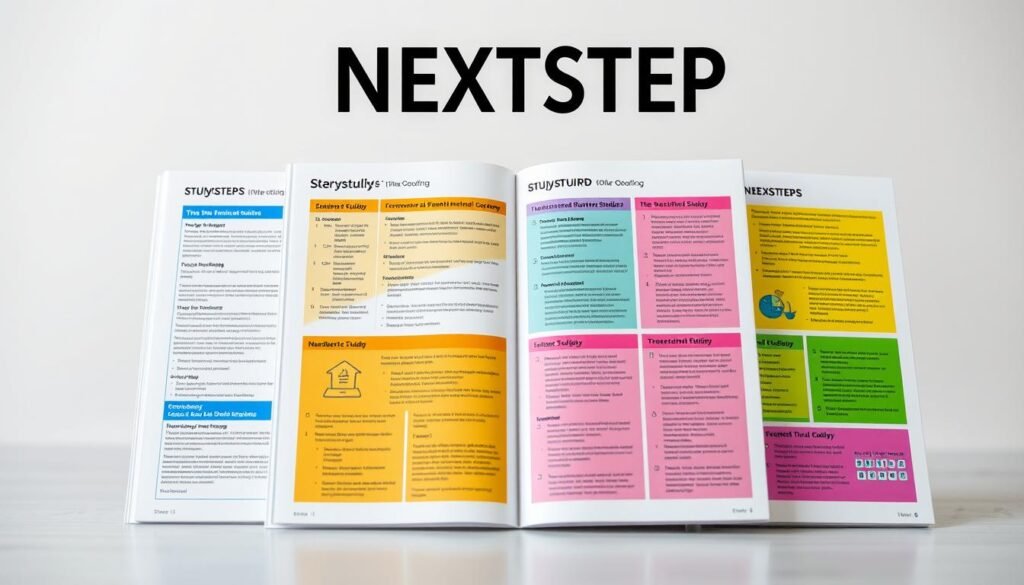
We help students plan their studies well. We focus on English, Math, Science, and Social Studies. Use NCERT books, sample papers, and guide apps for a good study plan.
English Language Arts
We teach grammar and writing skills. Practice reading and understanding unseen passages from CBSE and state boards.
Do lots of essay and letter writing. Use sample papers and notes to improve. A guide with grammar, writing, and analysis tasks helps daily study.
Mathematics
First, learn each unit well, then practice fast. Use NCERT problems and past board questions to get better.
Do problem sets, mock tests, and timed papers. Use solved examples to learn. A study guide with unit weightage and examples boosts confidence.
Science
We focus on deep understanding in Physics, Chemistry, and Biology. Mix theory with practice and lab work.
Practice writing experiment reports and doing viva questions. Use case studies and past questions to improve. Resources like diagrams and checklists help connect concepts to experiments.
Social Studies
We suggest focusing on timelines, maps, and source-based questions. Practice structured answers and essays to avoid mistakes.
Use chapter-wise board questions, map drills, and sample papers. A guide with key events, dates, and themes helps quick revision.
Subject-Specific Strategies for Success
We offer practical tips for each subject in a Higher Secondary Study Guide. Our goal is to make studying easier. We mix proven methods with educational tools and online resources for steady progress.
Effective Study Techniques
Divide the syllabus into smaller parts like the HSC All Guide Book suggests. Practice MCQs and long answers separately to improve your skills.
Use active recall and spaced repetition to remember better. Test yourself, then come back to topics later. For math and physics, break down big problems into smaller steps.
For social studies, use concept maps to connect events and outcomes. In language subjects, write essays in stages: plan, write, revise, and proofread. Focus on topics that count the most, as Jagran Josh advises.
Time Management Tips
Make a weekly plan based on board unit weightage and exam patterns. Focus on important units and set aside time for tough subjects.
Do short, focused study sessions with breaks in between. Practice full-length tests to get used to the exam timing. Use one day a week for mixed practice and checking mistakes.
Set goals for each study session, like solving a certain number of problems. Keep track of your progress to find weak areas and adjust your plan.
Incorporating Technology in Learning
Use platforms like Khan Academy, BYJU’S, and Coursera for extra learning. Jagran Josh and CBSE sample papers help with practice and format.
Choose apps that offer guides and updates. They help keep your study plan on track. Tools like Pomodoro timers and note-taking apps boost focus and efficiency.
| Focus Area | Recommended Tools | Practical Use |
|---|---|---|
| Memory & Recall | Anki, Quizlet | Spaced repetition flashcards for definitions and formulae |
| Concept Learning | Khan Academy, Coursera | Video demos and short courses to reinforce classroom lessons |
| Board Practice | CBSE PDFs, Jagran Josh | Chapter-wise sample papers and marking-scheme-focused practice |
| Productivity | Forest, Pomodone, Notion | Timed study blocks, distraction control, organized notes |
| Problem Solving | Photomath, Wolfram Alpha | Step-by-step problem decomposition and verification |
Resources for Higher Secondary Students

We have a list of academic resources for higher secondary students. They help build confidence and clarity. You’ll find printed textbooks, study material, and digital tools for revision.
Textbooks and reference materials
NCERT books are key for CBSE syllabi. They offer clear explanations and solved examples. Chapter-wise exercises match board expectations.
For more practice in Maths and Science, use reference guides. These guides have board-style questions.
Online learning platforms
The HSC All Guide Book app has content for all subjects. It includes explanations, board suggestions, and updates. Jagran Josh has downloadable CBSE PDFs and sample papers.
Video channels and courses on Coursera or edX help with concepts. Test-prep portals offer practice and timed assessments for JEE, NEET, and CUET.
Tutoring and study groups
Structured tutoring focuses on weak areas. It offers personalized plans and feedback. Peer study groups help students understand by teaching each other.
Use teachers’ content and educational tools for group sessions. This helps everyone learn more.
| Resource Type | Representative Names | Best For |
|---|---|---|
| Core Textbooks | NCERT Class 11–12 books | Syllabus accuracy, board preparation |
| Reference Guides | Reputed publishers’ Maths and Science guides | Extra practice, advanced problems |
| Consolidated App | HSC All Guide Book app | Chapter-wise revision, mobile access |
| Curated Portals | Jagran Josh | Downloadable PDFs, sample papers, updates |
| MOOCs and Videos | Coursera, edX, expert YouTube channels | Concept clarity, foundational courses |
| Test-Prep Sites | Specialized JEE/NEET/CUET portals | Timed practice, mock tests |
| Tutoring & Groups | Local tutors, online coaching, peer groups | Personalized support, collaborative learning |
For study plans and resources, contact NextStep at +91 8927312727 or info@nextstep.ac. Mix printed books with online tools for a strong study routine.
Tips for Writing and Research

We have simple steps to help you write and research better. Start with short routines and practice often. Use good sources, follow examples, and try timed tests.
Research skills development
First, check your sources. Choose NCERT books, CBSE papers, and peer-reviewed journals. Take notes with headings and bullet points. This helps you answer questions clearly.
Read actively with HSC Guide and Jagran Josh notes. Learn how to write good answers. Check facts with different sources to be sure.
Crafting effective essays
Make an essay plan: intro, body, and conclusion. Use examples from CBSE Class 12. This adds strength to your essay.
Practice writing under time pressure with CBSE prompts. This helps you write faster and better. Look at good examples to improve your writing.
Understanding plagiarism
Plagiarism means copying without saying who it’s from. Teach how to cite NCERT and CBSE. Paraphrase to make it your own.
Use a plagiarism tool for your work. Always be honest in your studies. This shows you value your work and the guide’s principles.
Here’s a quick daily practice guide:
- Check your sources: NCERT, CBSE papers, and peer-reviewed articles.
- Take notes and summarize after each study session.
- Plan your essays with a clear thesis and evidence.
- Practice timed writing and use Jagran Josh templates.
- Check for plagiarism and cite correctly to keep your work honest.
Preparing for Exams

We show you how to prepare for exams in a smart way. This guide helps you plan, practice, and stay well. Taking small steps can make you feel more confident.
Creating a Study Schedule
We make a plan based on the exam date and what you need to study. We focus on important topics and use spaced repetition. This helps you practice different types of questions.
Do timed mocks often. Use marking schemes and exam patterns to practice. A good plan helps you avoid last-minute stress.
Practice Tests and Past Papers
Practice with sample papers and past exams. Treat each mock like the real thing. Review your work to find areas to improve.
Make quizzes from your mistakes. Switch between chapter drills and full papers. This helps you get faster and more accurate.
Stress Management Techniques
We mix short breaks and mindfulness to keep you focused. Use Pomodoro cycles and breathing exercises. Good sleep and food help your memory.
If you’re feeling stressed, talk to teachers or counselors. Combining study with relaxation helps. For tips on staying calm, check out this resource.
| Action | Purpose | Frequency |
|---|---|---|
| Create chapter-wise plan | Cover syllabus systematically and focus on board questions | Once, before each term |
| Timed full-length mocks | Build exam stamina and time management | Weekly in final month |
| Targeted practice tests | Fix weak topics using previous year papers and sample papers | Twice weekly |
| Spaced revision cycles | Improve long-term retention | Daily short sessions, weekly reviews |
| Mindfulness and breaks | Reduce stress and maintain focus | After every 25–50 minutes |
| Teacher or counselor check-ins | Address doubts and manage exam anxiety | Biweekly or as needed |
Engaging with Teachers and Peers

When students, teachers, and parents work together, learning gets better. Talking to teachers often helps understand what’s expected. It also makes sure study materials match the exam style.
Teachers sharing sample papers and marking schemes helps. Parents keeping an eye on progress helps too.
We will show you how to make classroom relationships stronger. And how to get the most from study materials.
Building Positive Relationships
Meeting with teachers once a week is a good idea. It’s a chance to talk about how you’re doing and get feedback. Teachers can also suggest the best study materials from the Higher Secondary Study Guide.
When parents help out, it’s easier to keep up with homework. Teachers can suggest content from trusted sources like NCERT and Cambridge. This helps everyone learn better and think deeper.
Participating in Class Discussions
Listening well and asking smart questions makes class better. Try to come up with two or three questions before each lesson. These can be about case studies, questions that need answers, or lab work.
Working in groups helps make tough topics clearer. Study circles are great for breaking down big problems. You can share notes and review past exams together. This way, everyone understands better without repeating the same things over and over.
Here’s a comparison to help plan how to interact and choose the right tools and habits.
| Focus Area | Teacher Role | Student Action | Recommended Resources |
|---|---|---|---|
| Clarifying Exam Pattern | Provide sample papers and marking schemes | Practice timed papers and ask rubric questions | School-provided sample papers, board guidelines, Higher Secondary Study Guide |
| Formative Feedback | Give short, actionable comments on drafts | Implement feedback in next attempt | Annotated assignments, teacher notes, study material packets |
| Concept Mastery | Lead case-study discussions and lab demos | Create summary notes and explain to peers | Lab manuals, academic resources, educational tools |
| Peer Collaboration | Facilitate group tasks and set objectives | Form study groups and assign roles | Collaborative platforms, shared study material, Higher Secondary Study Guide |
| Parental Involvement | Recommend monitoring strategies and key milestones | Share progress reports and seek guidance | Progress trackers, school reports, curated academic resources |
Extracurricular Activities
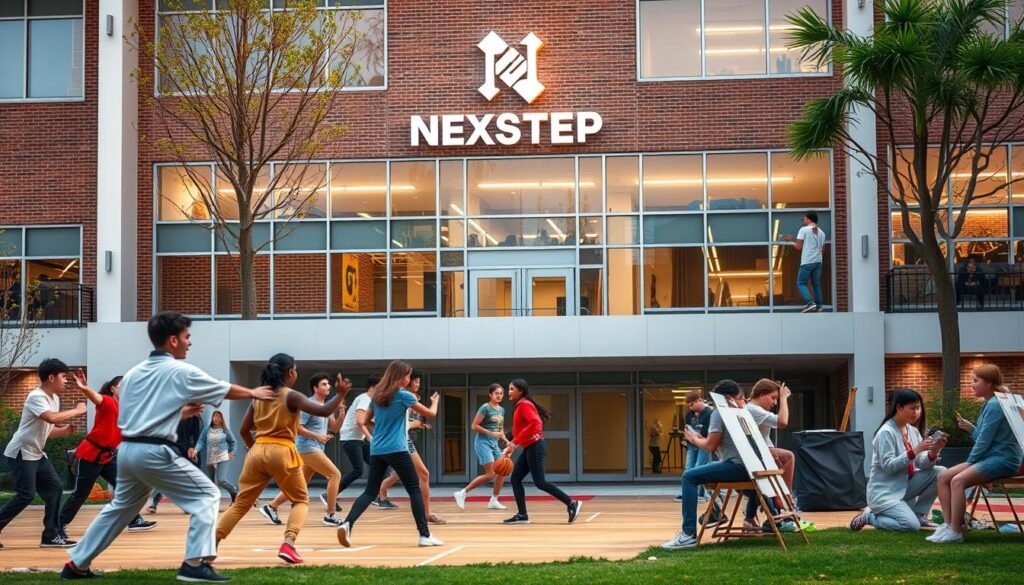
We believe in growing well-rounded students. This means balancing school work with fun activities. Clubs and sports teach skills that help in college and work.
It’s good to have a mix of study and club time. Use short study sessions and special resources. This way, you can join clubs and do well in school.
Benefits of Joining Clubs
Clubs help you learn to lead, talk well, and work in teams. These skills help you feel more confident and do well in school.
Being in robotics or debate teams adds to what you learn in books. It shows you can solve problems and take action.
Sports and Physical Education Opportunities
Playing sports keeps you healthy and calm. It helps you focus and remember things better, which is good for tests.
Sports teach you to manage your time and keep going even when it’s hard. Physical education helps you find a balance between staying active and doing well in school.
- Mix study sessions with club meetings: short, regular blocks work best.
- Use academic resources for efficient revision: targeted reading beats passive hours.
- Track extracurricular activities on application forms: detail roles and outcomes.
Navigating College and Career Planning

We help higher secondary students connect their board success to future studies and jobs. This guide shows how to use the Higher Secondary Study Guide and other resources. It helps make choices, meet deadlines, and explore interests.
Guidance on college applications
Start researching college applications early. Look at score needs, entrance exams, and deadlines. Make sure your board exam scores match what colleges want.
Get your documents ready at the same time. Work on project reports, keep records of activities, and get teacher letters. Use CBSE and Jagran Josh materials to improve your answers.
Understanding career pathways
Link your subjects to possible degrees. Science students might look at engineering or medicine. Commerce students could aim for B.Com or BBA. Humanities students might choose law or design.
Try out different things through internships and workshops. This helps you see if you like a field. Use CBSE Class 12 resources to prepare for exams.
Here’s a quick checklist to help you stay on track:
- Compare college score needs and entrance types.
- Match your study plan with exam formats and board priorities.
- Put together project portfolios and get them verified.
- Try internships or workshops to see what you like.
- Use trusted resources for focused study.
| Action | Why it matters | Resources to use |
|---|---|---|
| Set target scores | Ensures eligibility for preferred programs and reduces last-minute stress | Higher Secondary Study Guide, CBSE sample papers, HSC All Guide Book |
| Align syllabus study | Focuses effort on tested topics and entrance patterns | CBSE marking schemes, past entrance papers, syllabus summaries |
| Build application portfolio | Shows depth beyond marks: projects, leadership, validated achievements | School transcripts, project reports, verified extracurricular records |
| Explore career pathways | Helps choose subjects and degree tracks that fit strengths and market demand | Counselor sessions, internships, industry workshops, academic resources |
| Practice with mock tests | Improves time management and exam confidence for boards and entrances | Sample papers from Jagran Josh, CBSE past papers, coaching mock tests |
Conclusion and Next Steps
We have shown a clear path from basic ideas to being ready for exams. Use a Higher Secondary Study Guide that mixes NCERT books with digital tools like the HSC All Guide Book and Jagran Josh. These tools help you study better and reach more students in India.
Final Thoughts for Higher Secondary Success
Follow study tips that include unit-wise weightage, past papers, and sample questions. CBSE Class 12 advice says to prepare smartly. Practice with old papers, test yourself in exam-like settings, and learn from real-life examples.
Also, mix focused study with healthy habits. Manage your time well, get enough sleep, and exercise lightly. This helps you remember things better and stay strong during exams.
Encouragement for Lifelong Learning
We encourage you to go beyond just passing exams. Keep learning and getting better. Use online learning sites, apps, Jagran Josh, and CBSE materials to learn more.
For a study plan that fits you, contact NextStep at +91 8927312727 or info@nextstep.ac. Let’s work together to reach your goals.